
Concrete 3D Printer Systems for Labs, Universities, and Construction
ASFAN supplies concrete 3D printer systems for lab-scale research, university programs, construction prototyping, and practical concrete 3D printing workflows.
Technology Equipments / FabLab / 3D Printers
Concrete 3D Printer Solutions
A product pathway from controlled lab testing to construction-scale concrete 3D printing.
Concrete 3D printing turns a digital model into a physical cementitious element through controlled, layer-by-layer deposition. For teams that need to move beyond theory, a concrete 3D printer provides the machine control, material testing environment, and repeatable workflow required to validate printable mixes and prototype real components. ASFAN keeps this page focused on concrete 3D printer systems for labs, universities, and construction teams, while also explaining how the wider concrete 3D printing process connects to equipment selection.
Our concrete 3D printer systems support each adoption stage: mix validation, printability testing, pilot components, and scalable site deployment. The range includes tabletop R&D systems, lab scale concrete 3D printer platforms, and gantry-style systems for larger building applications, making this the main ASFAN product hub rather than a general introductory article.
Digital-to-build workflow
Move directly from CAD/BIM design to machine toolpath with high repeatability.
- Automated layer deposition reduces manual formwork and shortens project cycles.
- Machine-controlled pathing supports complex geometries that are difficult with conventional casting.
Material research and scalability
Validate mortar rheology, buildability, and interlayer bonding before scaling up.
- Integrated or external mixing and pumping options support different lab and field workflows.
- Print parameter tuning helps optimize nozzle speed, layer height, and curing conditions.
- Reduced waste through targeted material deposition only where needed.
- Better repeatability with programmable movement and controlled extrusion.
- Scalable systems for tabletop research, floor-scale prototyping, and full-site construction.
- Supports mortars, geopolymers, and aggregate-based printable concretes.
What Is Concrete 3D Printing?
Concrete 3D printing is an additive construction method that builds cementitious elements layer by layer from a digital model. A concrete 3D printer is the equipment that executes this process, while concrete 3D printer systems include the printer, material delivery, mixing or pumping setup, controls, and workflow support needed for reliable research or construction use.
For laboratories and construction teams, the value is not only the printed object. The value is the controlled process: material preparation, toolpath planning, automated extrusion, measurement, and repeatable improvement before scaling from lab trials to larger prototypes or on-site applications.
Concrete 3D Printing Process in 4 Steps
- Digital design: A CAD or BIM model is prepared and converted into printable toolpaths.
- Material preparation: Mix design is tuned for rheology, pumpability, and interlayer bonding.
- Automated deposition: The concrete 3D printer executes controlled layer-by-layer extrusion.
- Quality control: Teams validate dimensional accuracy, layer stability, and curing behavior.
This is why concrete 3D printing is now used for housing, infrastructure components, architectural elements, and material R&D programs in universities and engineering labs.
How Concrete 3D Printing Systems Support Research and Construction
A concrete 3D printing project needs more than a standalone machine. It needs a system that connects printable material behavior with motion control, extrusion quality, build volume, and the intended output. ASFAN helps teams choose systems according to whether the priority is laboratory research, university training, prototype development, or construction-scale deployment.
This keeps the page aligned with commercial system selection while giving searchers a clear bridge from the broad topic of concrete 3D printing to ASFAN's concrete 3D printer systems for labs and construction teams.
Our Concrete 3D Printer Range
Choose a platform sized to your workflow, from controlled R&D experiments to large-scale, on-site construction output.
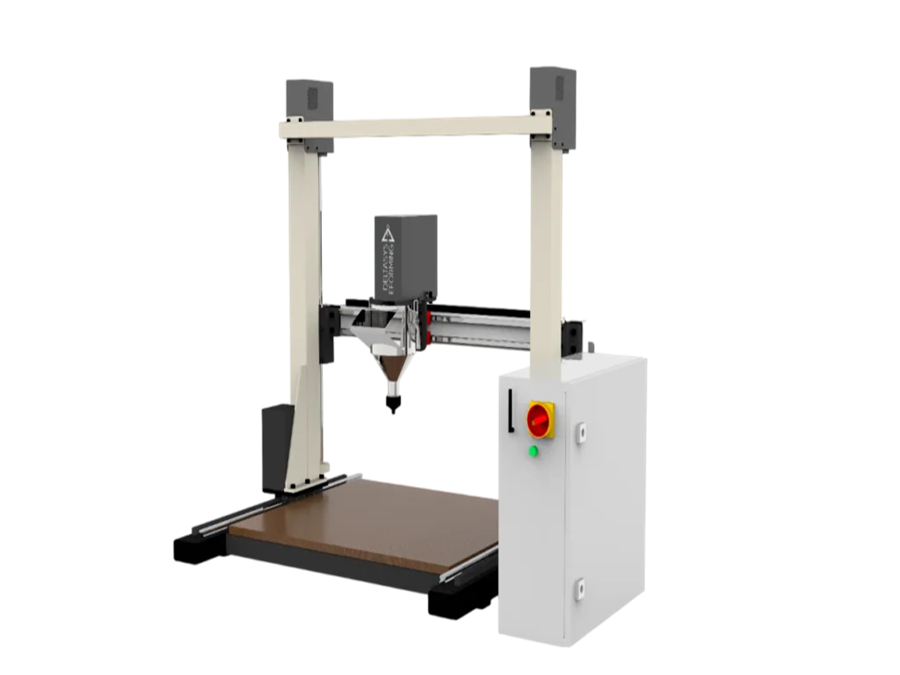
Table Top Small R&D Concrete 3D Printer
(600mm x 600mm x 600mm Build Volume)
Designed for research labs and universities, this compact printer includes an integrated mixing and dosing system and a polycarbonate-enclosed build area. It enables affordable, hands-on research into cementitious materials, mortar rheology, and printability - all within a controlled lab environment.
- Ideal for proof-of-concept studies and academic curricula.
- Compact footprint for indoor deployment and routine iteration.
- Fast parameter testing for mix design and layer stability.
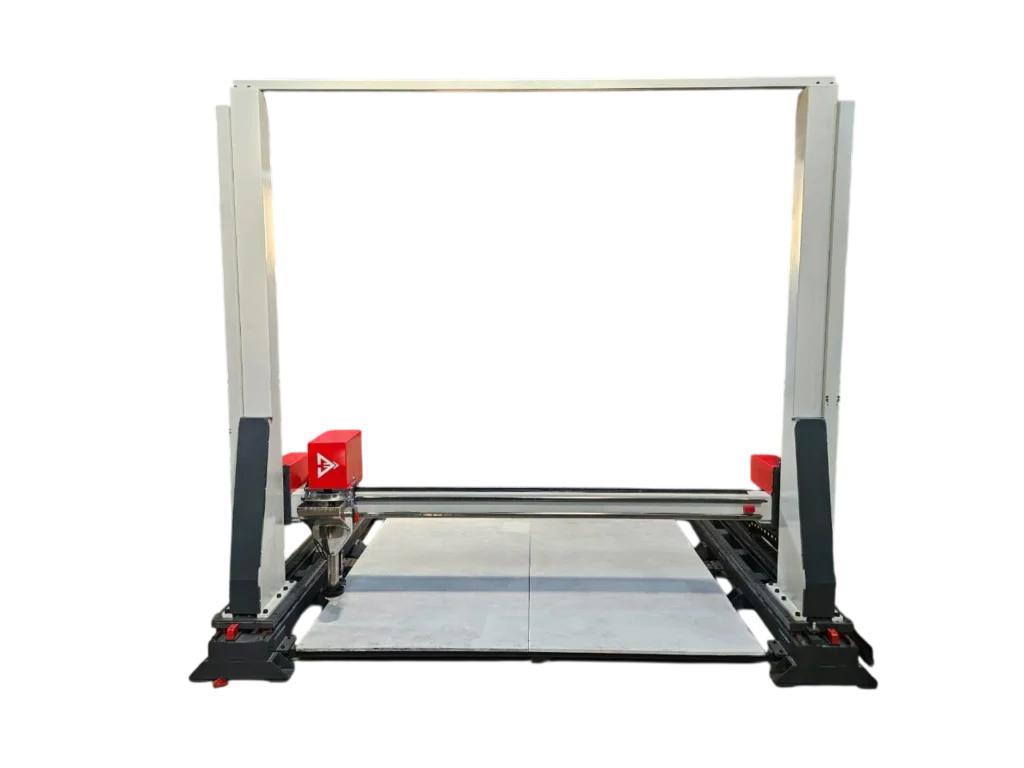
E-builder lab scale Concrete 3D Printer
(1000mm3 and 2000mm3 Models)
Suited for mid-sized prototyping and advanced material testing, these machines support a broader range of materials including mortars, geopolymers, and aggregate-based concretes. Installed on a level ground surface, they work with industrial mixing and pumping systems and are ideal for scaling up lab research for real-world applications.
- Bridges the gap between small research prints and construction-ready components.
- Supports broader process validation for structural and facade elements.
- Compatible with industrial pumps for higher-throughput material delivery.
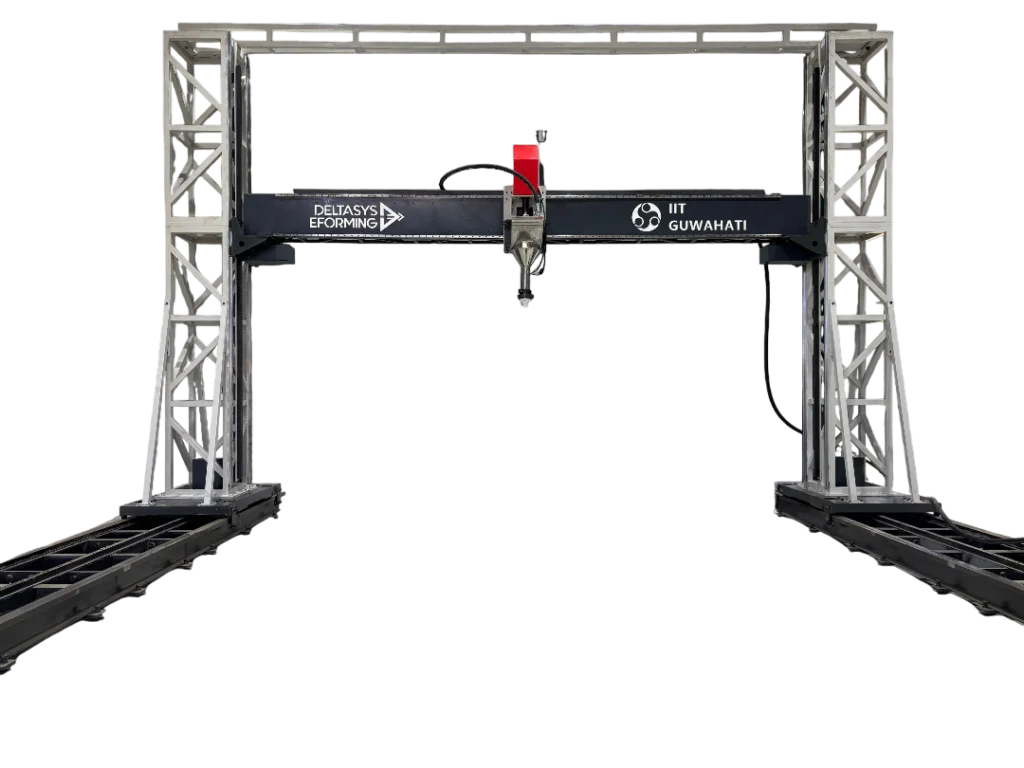
On-site gantry-style Concrete 3D Printer
(Customizable for Large-Scale Construction)
Our largest and most robust solution, the gantry-style system is built for on-site 3D printing of homes, public infrastructure, and large architectural elements. Engineered for mobility and scalability, these machines can print directly at construction sites using a variety of printable concretes, enabling faster builds and digital customization on demand.
- Best for direct construction of walls, shells, and custom structural forms.
- Designed for site deployment, transportability, and configurable print envelopes.
- Supports rapid execution for housing, infrastructure, and large architectural builds.
Technical highlights
- Workflow
- CAD/BIM to sliced toolpath to automated deposition
- Materials
- Mortars, geopolymers, and printable aggregate concretes
- Process control
- Mixing, dosing, pumping, and nozzle speed optimization
- Quality focus
- Layer geometry, interlayer bonding, and curing management
- Use cases
- Housing, infrastructure, facades, custom architectural components
- Scalability
- Lab R&D, pilot prototyping, and full-site construction output
Why Choose Concrete 3D Printing at ASFAN?
We support teams from first material trials to deployment-ready printing workflows.
- End-to-end pathway from lab experimentation to construction-scale execution.
- Platform range matched to universities, R&D centers, and project developers.
- Guidance on printable concrete behavior, process setup, and parameter tuning.
- Focus on repeatability, reduced waste, and practical deployment outcomes.
Concrete 3D printing is no longer experimental only. With the right machine scale and process control, it becomes a practical production method for research, prototyping, and real construction.
Why Concrete 3D Printing matters now
Concrete 3D printing is not only a machine category. It is a full workflow that combines digital design, automated deposition, material behavior analysis, and scalable execution.
- Improves repeatability through process control and automated pathing.
- Supports material studies such as rheology, buildability, and interlayer bonding.
- Enables complex geometries while reducing manual formwork and material waste.
- Scales from tabletop R&D to construction-size on-site gantry systems.
Who needs Concrete 3D Printing solutions?
- Universities and civil engineering faculties
- Construction technology and material labs
- R&D centers and digital fabrication programs
- Project developers exploring digital construction workflows
Research use vs construction use
Research use: Focuses on controlled testing, material validation, and repeatable parameter optimization.
Construction use: Focuses on scale, pumping integration, site deployment, structural workflow, and execution speed.
Concrete 3D Printer for Research Labs
Research labs use a concrete 3D printer to evaluate mix rheology, pumpability, buildability, interlayer bonding, and repeatable print parameters before moving to larger prototypes.
Concrete 3D Printer for Universities
Universities can use lab scale concrete 3D printer systems for civil engineering, architecture, material science, robotics, digital fabrication, and applied construction technology programs.
Concrete 3D Printer for Construction and Prototyping
Construction teams use larger concrete 3D printing systems to prototype walls, facade elements, infrastructure components, and site-ready digital construction workflows.
Lab Scale vs On-Site Concrete 3D Printer
Lab scale systems are best for controlled experiments, compact footprints, material validation, and teaching environments.
On-site systems are selected when the priority is larger print envelopes, field deployment, pumping integration, and construction output.
How to Choose the Right Concrete 3D Printer
Start with the intended output: material research, academic training, prototype parts, or on-site construction. Then match the build volume, mixing and pumping setup, material range, and control requirements.
ASFAN helps teams compare concrete 3D printer systems by project stage so the selected platform supports today's experiments and tomorrow's scale-up plan.
Related Concrete 3D Printing Resources
- Engineering lab equipment and technology supplier
- Engineering labs and university laboratory equipment
- 3D printer category for engineering and fabrication labs
- Nano-Technology 3D printer for high-precision prototyping
- Concrete 3D printing guide and workflow overview
- 3D printers for clay and cement as a supporting lab pathway
- Request a concrete 3D printing consultation
Concrete 3D Printer Workflow: From CAD/BIM Model to Printed Element
A reliable concrete 3D printer is not only judged by motion range or nozzle size. The real value comes from the full workflow: digital modeling, printable material preparation, pumping or dosing, controlled layer deposition, and repeatable quality checks. This is the workflow universities, civil engineering labs, and construction innovation centers need when they move from a demonstration print to meaningful research data or practical prototype output.
1. Digital design
CAD or BIM geometry is prepared, simplified where needed, and translated into printable paths that match the printer envelope and nozzle behavior.
2. Mix validation
Printable mortar or concrete is tested for rheology, pumpability, open time, layer stability, and interlayer bonding before larger builds.
3. Controlled deposition
The printer deposits material layer by layer while teams tune speed, layer height, extrusion rate, nozzle geometry, and environmental conditions.
4. Quality feedback
Printed samples are measured for dimensional accuracy, surface quality, buildability, curing behavior, and repeatable performance.
Concrete 3D Printer for Research Labs and Material Validation
Research labs need controlled systems that make material behavior visible. A lab scale concrete 3D printer helps teams compare mix designs, cementitious binders, admixtures, fibers, aggregate grading, water ratios, and curing strategies under repeatable conditions. This makes the equipment valuable for research papers, industrial validation, and procurement decisions where data matters more than a one-time visual demonstration.
- Test buildability, slump retention, extrusion consistency, and shape stability.
- Validate interlayer bonding, curing behavior, surface finish, and failure modes.
- Create repeatable print data for material development and construction technology R&D.
Concrete 3D Printer for Universities
For universities, a concrete 3D printer can become a shared teaching and research platform across civil engineering, architecture, materials science, robotics, construction management, and digital fabrication programs. Students can move from CAD/BIM models to printed samples while learning the practical limits of additive manufacturing in construction.
The strongest university labs use the system for coursework, capstone projects, funded research, faculty demonstrations, and industry collaboration with local contractors or government innovation programs.
Concrete 3D Printer for Civil Engineering Departments
Civil engineering departments can use concrete 3D printing to connect material science with structural behavior and construction methods. The printer supports experiments on layer geometry, anisotropy, reinforcement strategies, fresh-state behavior, hardened properties, and constructability constraints.
This creates a practical bridge between laboratory testing and the realities of digital construction, especially for departments modernizing their construction materials and building technology labs.
Concrete 3D Printer for Construction Innovation Centers
Construction innovation centers use concrete 3D printer systems to evaluate new building methods before committing to full project deployment. Common use cases include architectural wall samples, facade panels, landscape elements, small shelters, infrastructure components, formwork alternatives, and proof-of-concept structures for digital construction programs.
Local sector use cases
Housing pilots, infrastructure prototypes, public-realm elements, architectural forms, and contractor training programs.
Institutional procurement value
Clear equipment pathways for universities, labs, research centers, and government-backed innovation initiatives.
R&D differentiation
More than a display machine: a platform for measurable additive construction experiments and repeatable process development.
Lab Scale Concrete 3D Printer vs Construction Scale Concrete 3D Printer
| Selection point | Lab scale system | Construction scale system |
|---|---|---|
| Best for | Mix testing, education, small prototypes, controlled research. | Large components, site trials, walls, shells, and project demonstrations. |
| Primary users | Universities, civil engineering labs, material researchers. | Contractors, innovation centers, developers, construction R&D teams. |
| Key requirement | Repeatability, safety, compact footprint, data collection. | Build volume, pump integration, mobility, and site-ready workflow. |
What to Consider Before Buying a Concrete 3D Printer
- Target use: teaching, research, prototyping, or site deployment.
- Build volume, nozzle system, pump compatibility, and material delivery.
- Printable material range, mix testing process, and safety requirements.
- Training, installation, maintenance, spare parts, and future scale-up path.
Why Choose ASFAN for Concrete 3D Printer Systems
ASFAN helps organizations select equipment that fits the real workflow instead of buying a machine in isolation. We align the system with research goals, university lab planning, civil engineering curriculum, construction innovation programs, and procurement requirements.
Plan your concrete 3D printing labFrequently Asked Questions
Build smarter from lab validation to on-site execution.
If your organization is planning to adopt concrete 3D printing, the right platform strategy can reduce risk, improve research output, and accelerate deployment.
Explore More Categories
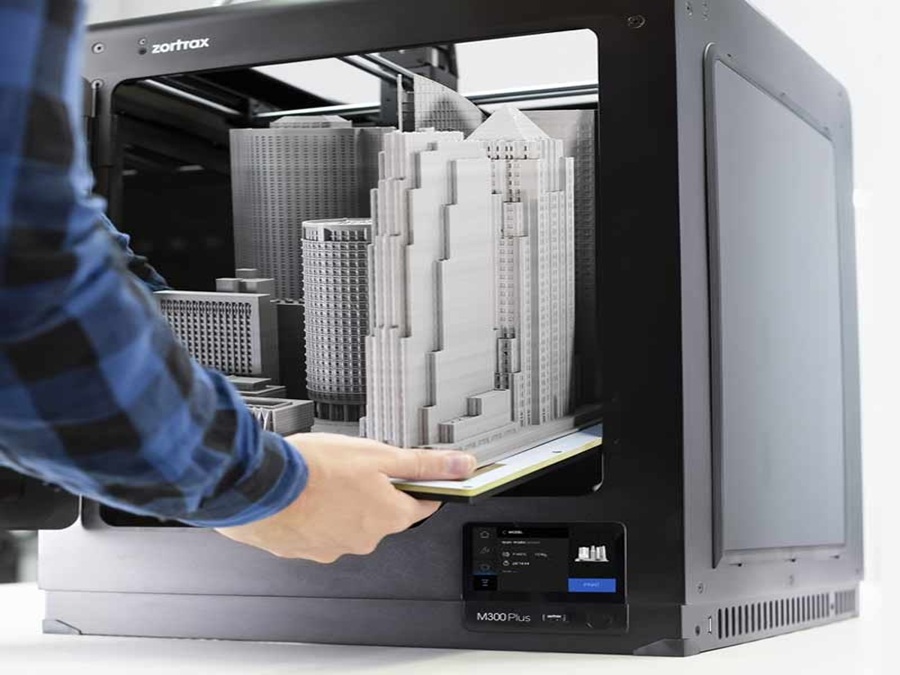
Related engineering and technology solutions
Engineering lab equipment, technology equipment, and training solutions for institutions.
Digital fabrication, CNC, robotics, 3D scanning, and prototyping equipment.
University labs, smart engineering labs, workshops, and research facilities.
Concrete 3D printer systems for labs, research, and construction technology.
Precision 3D printing for research labs, prototyping, and engineering education.
Spatial vision cameras for robotics, 3D scanning, automation, and AI labs.
We welcome your questions, do not hesitate to contact us
- Create virtual reality and augmented reality experiences at the best prices
- Equipping engineering laboratories with the best equipment
- Virtual tours with 360° technology and also feature that you can see them through just one link
- Create virtual reality and augmented reality experiences at the best prices
- Equipping engineering laboratories with the best equipment
-
Virtual tours with 360° technology and also feature that you can see
them through just one link