
Geothermal Power Generation
Clean electricity from Earth’s heat
Geothermal power generation harnesses the natural heat stored beneath the Earth’s surface to produce clean, reliable electricity. By drilling deep into hot rock formations, water is heated and turns into high-pressure steam that drives turbines to generate power. This sustainable process delivers continuous energy with minimal carbon emissions.
To help learners fully understand how geothermal systems work, the workflow is divided into three immersive VR experiences — each demonstrating a key stage of the energy cycle.
Experience 1: Geothermal Well Drilling
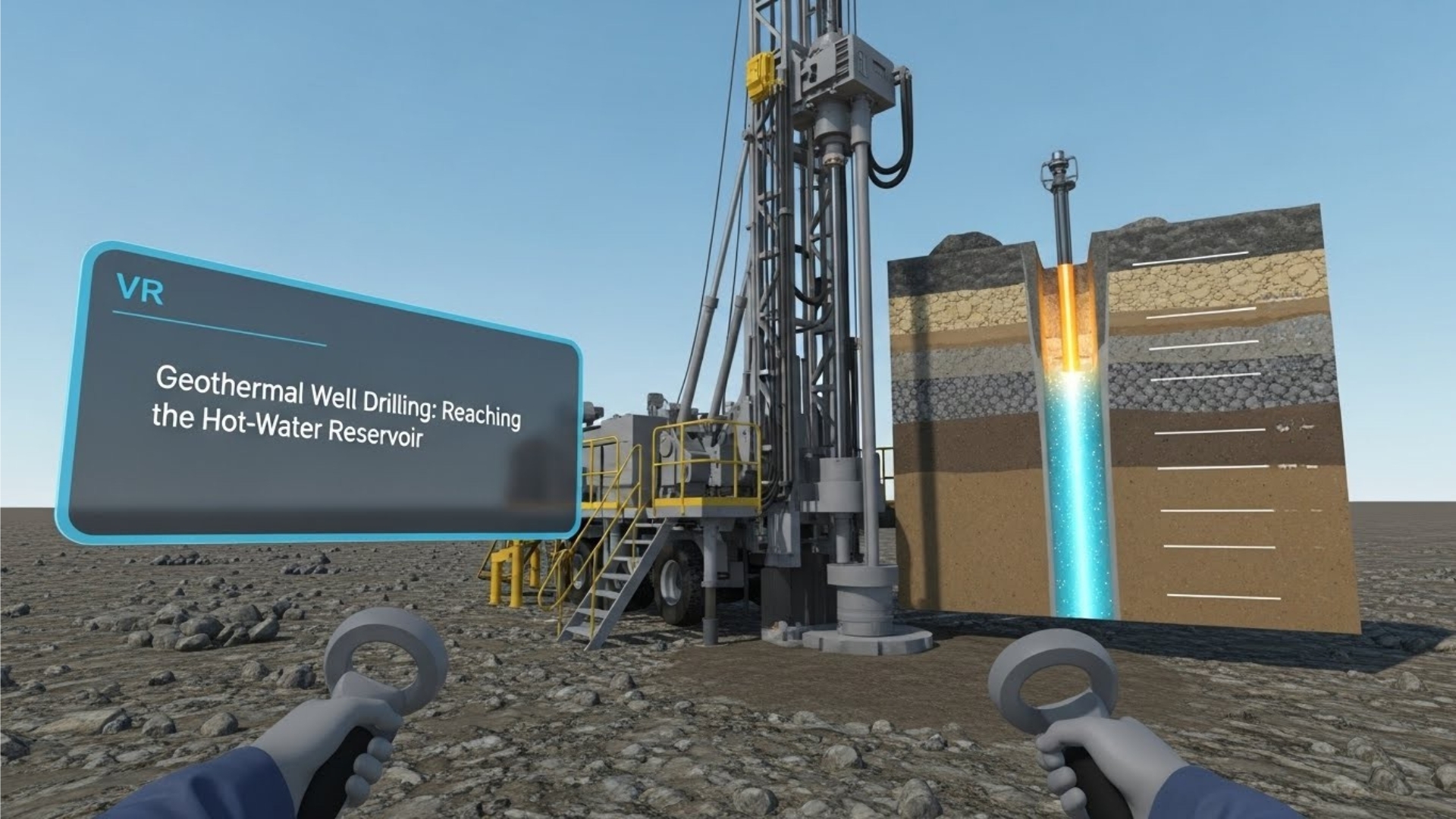
Exploring how naturally heated underground water produces clean energy. This VR experience takes the learner deep beneath the Earth’s surface to understand how geothermal energy begins in natural hydrothermal reservoirs.
- Start at a geothermal drilling site as engineers prepare to access an underground hydrothermal reservoir.
- See how the drilling rig is positioned and initiated.
- Watch the drill travel through soil, sediment layers, and solid rock formations.
- Follow a live cross-section view showing rising temperature and pressure as the drill approaches the hot-water reservoir.
- Start the drilling sequence using virtual control buttons.
- Select geological layers to view depth, temperature, and rock-type information.
- Observe real-time pressure indicators as the drill nears the hot reservoir.
- Activate the wellhead valve to watch natural steam rise to the surface while guided voice and text prompts explain each stage.
These actions help the learner visualize how geothermal steam is extracted with minimal intervention.
Experience 2: Steam Production & Turbine Operation
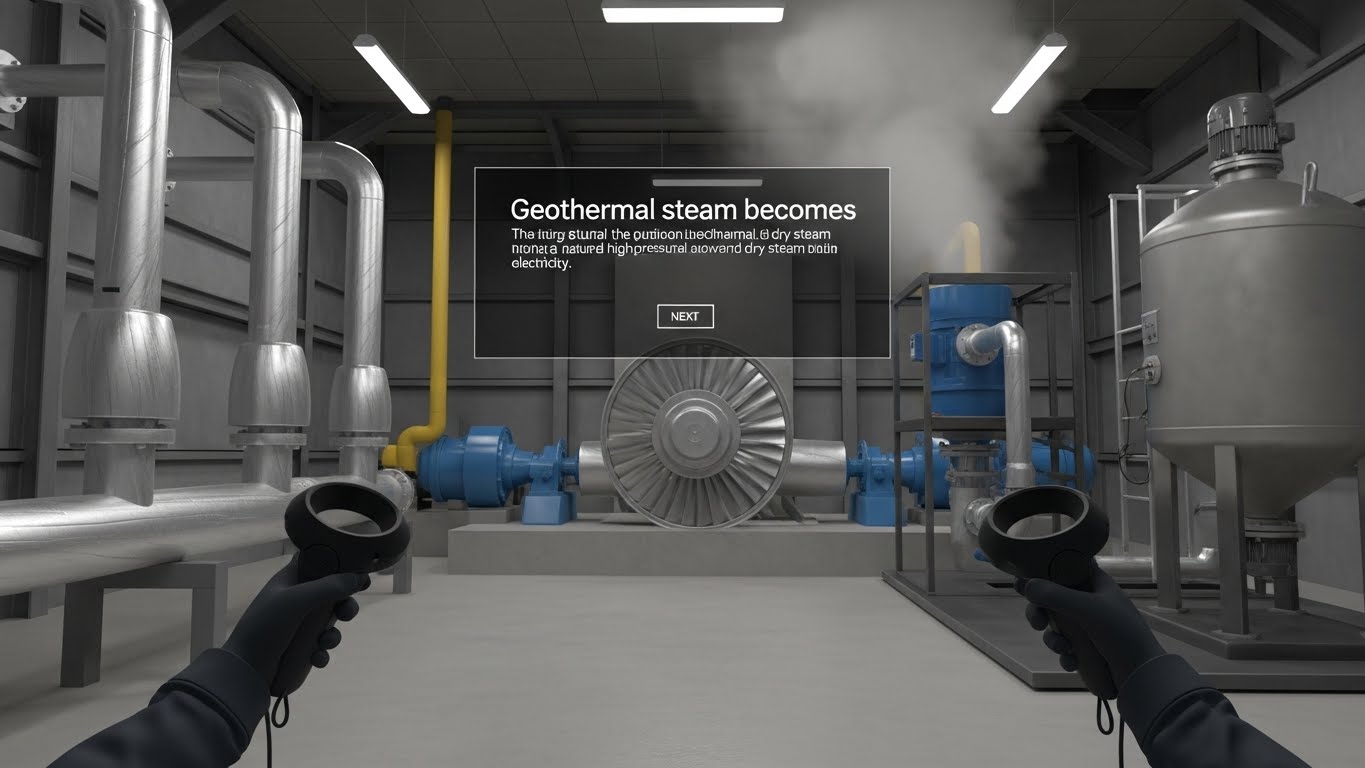
How natural steam turns into electricity. Learners move from the drilling site to the turbine hall to see geothermal steam transformed into clean electrical power.
- Steam Collection: natural high-pressure steam rises from the geothermal well, passes a separator to remove droplets, then travels through insulated pipes toward the turbine.
- Turbine Operation: steam enters the turbine inlet, pushes the blades, and rotates as steam energy becomes mechanical motion with simplified animations of blade movement and speed.
- Power Generation: the spinning turbine drives the generator, converting mechanical energy into electrical energy while output indicators rise with steam flow.
- Learner actions: open the steam valve to start turbine rotation and watch visual meters show steam -> motion -> electricity.
- Check pressure and speed gauges on a control panel while selecting turbine parts (blades, shaft, generator) for quick explanations.
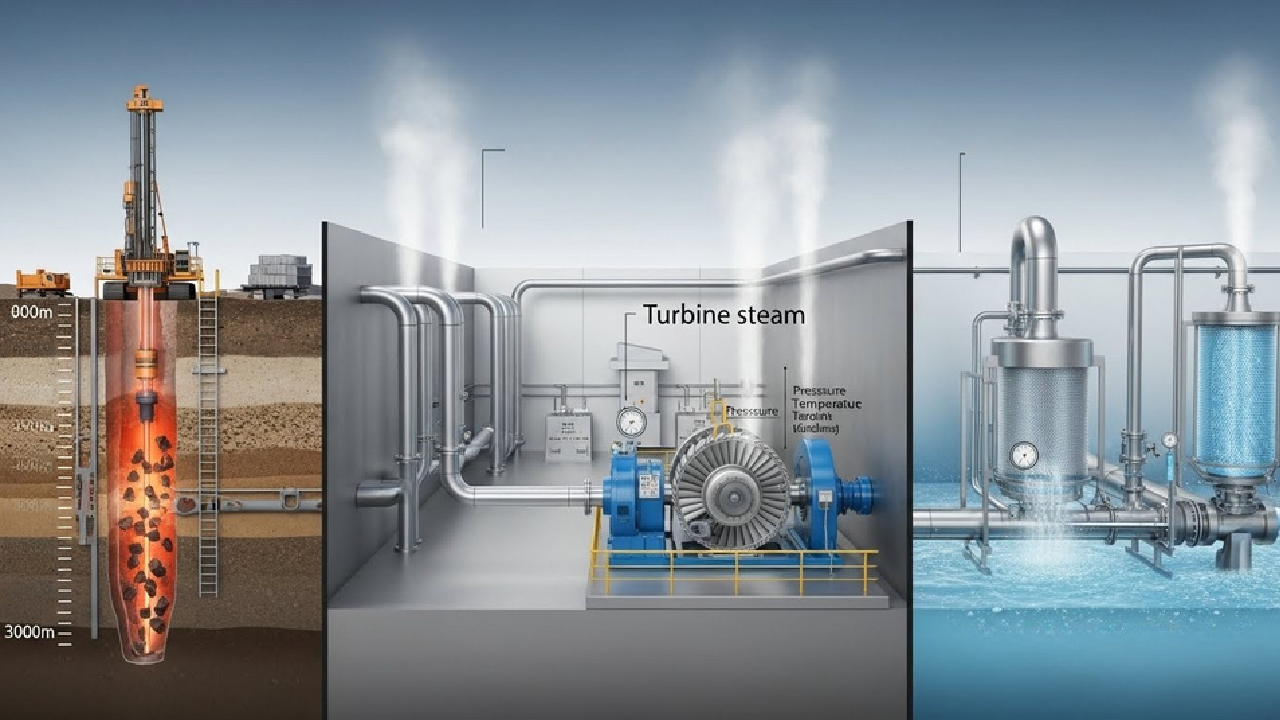
Learning objective: understand the last phase of geothermal energy production—condensing the steam, turning it back into water, and reinjecting it into the Earth to maintain the reservoir. In this final VR experience, the closed-loop cycle keeps the geothermal reservoir healthy and constantly producing energy. The learner begins outdoors near the cooling system, watching hot steam exit the turbine, enter the condenser, cool into liquid, and flow toward the reinjection well.

Condense the Steam
Activate the condenser visualization to see steam gradually cooling inside the chamber and turning into liquid water.
Open Reinjection Flow
Open the reinjection valve to allow the cooled water to move toward the reinjection well through insulated pipes.
Follow the Pipeline
Use guided markers to follow the pipeline from the condenser to the reinjection point, confirming continuous closed-loop flow.
View Depth Cross-Section
Examine a depth cross-section that shows where water is injected underground and how it is reheated naturally by the Earth.
Explore More Projects
VR Geo Thermal
VR Waste To Energy
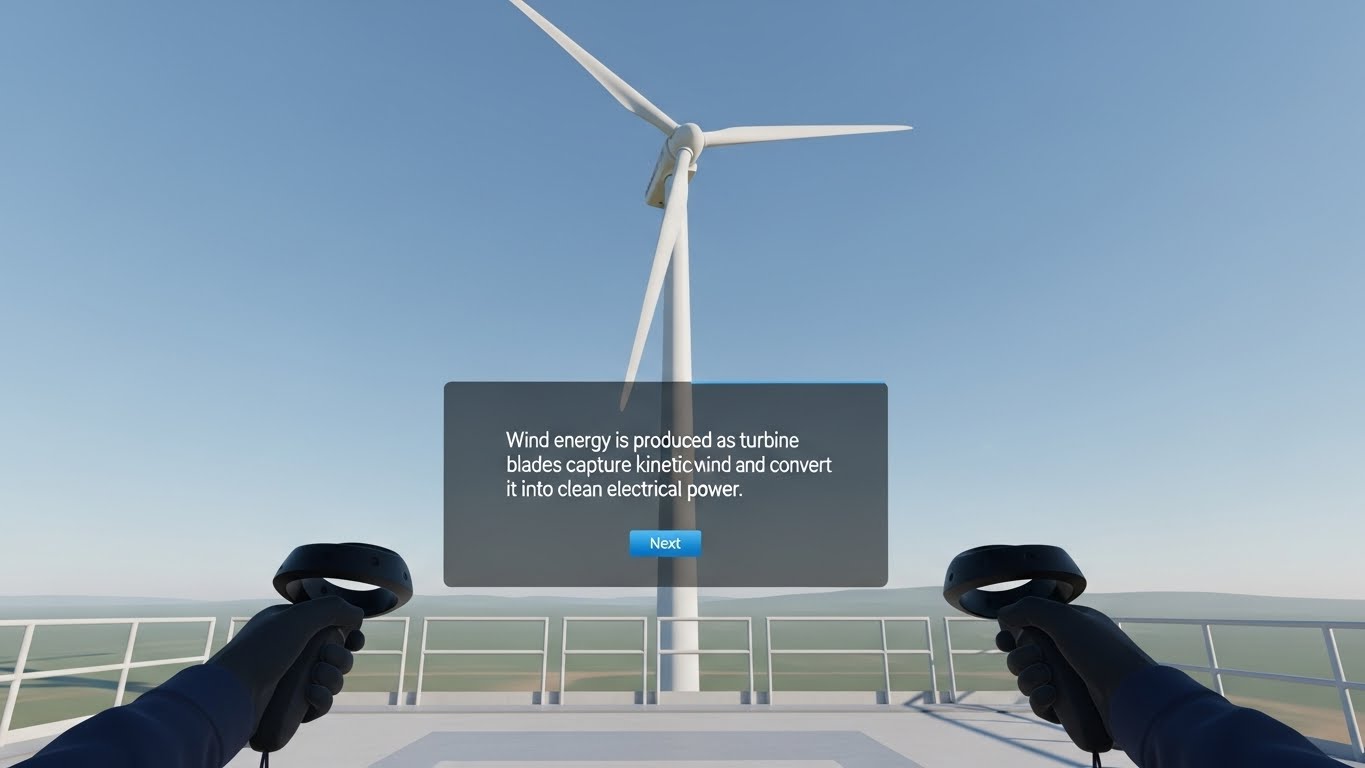
VR Wind Turbine Installation
We welcome your questions, do not hesitate to contact us
- Create virtual reality and augmented reality experiences at the best prices
- Equipping engineering laboratories with the best equipment
- Virtual tours with 360° technology and also feature that you can see them through just one link
Why partner with us?
- Immersive, interactive VR labs that boost learner engagement.
- Safe, repeatable simulations without fragile equipment.
- Fast iterations to match your curriculum and objectives.