
Medical VR is one of the fastest-growing categories inside healthcare education, and for good reason. Hospitals, medical schools, and nursing colleges need safe, repeatable, and measurable ways to train staff before those staff members ever touch a real patient. This guide brings together everything ASFAN builds around medical VR training, medical VR simulation, medical VR simulation training, and the medical VR training content that powers all of it.
Instead of treating medical VR as a single generic product, ASFAN builds it as a connected library of specialty-specific experiences: nursing, EMS, physical examination, psychiatry, surgery, medical devices and facilities, and clinical fundamentals such as blood testing. If you already know medical VR broadly, you can also explore our dedicated VR Medical hub and our medical training VR overview for related reading.
What is medical VR?
Medical VR is the use of virtual reality to recreate clinical environments, patients, procedures, and equipment so that healthcare learners can see, interact with, and practice medicine inside a controlled, repeatable, and completely safe simulation. Instead of reading about a procedure or watching a video, the learner performs it, again and again, until the skill becomes second nature.
Medical VR commonly supports:
- Nursing skills training
- Emergency medical services (EMS) response simulation
- Physical examination practice
- Medical devices and facilities training
- Psychiatry and therapeutic communication scenarios
- Surgery and procedural simulation
- Blood testing and other clinical fundamentals
Medical VR training: how it actually works
Medical VR training is more than a headset and a 3D model. A real medical VR training program is built around a specific clinical skill, a defined learning outcome, and a way to measure progress. At ASFAN, a medical VR training module is designed to:
- Introduce the clinical context and objective before the learner starts
- Let the learner perform the real steps of the procedure, in order
- Give immediate feedback when a step is missed or performed incorrectly
- Allow unlimited repetition without added cost or risk
- Track completion so instructors can confirm readiness
This structure is what separates genuine medical VR training from a simple 3D walkthrough: the learner is training a skill, not just observing content.
Medical VR simulation: practicing real clinical scenarios
While medical VR training focuses on teaching a skill step by step, medical VR simulation focuses on placing the learner inside a realistic clinical scenario and asking them to respond. A medical VR simulation might place a nursing student in front of a deteriorating patient, an EMS trainee at the scene of an emergency, or a physical examination student with an undiagnosed patient in front of them.
The goal of medical VR simulation is decision-making under realistic pressure, in an environment where a wrong decision costs nothing but a repeat attempt. Combined with structured training, this is what we call medical VR simulation training: a full cycle of learn, practice, simulate, and repeat.
Medical VR simulation training across clinical specialties
ASFAN builds medical VR simulation training around the real structure of a healthcare organization, not a single generic scenario. Current specialty areas include:
- Virtual Reality Nursing
- VR Devices & Facilities
- VR EMS
- VR Physical Examination
- VR Psychiatry
- VR Surgery
- VR Blood Test
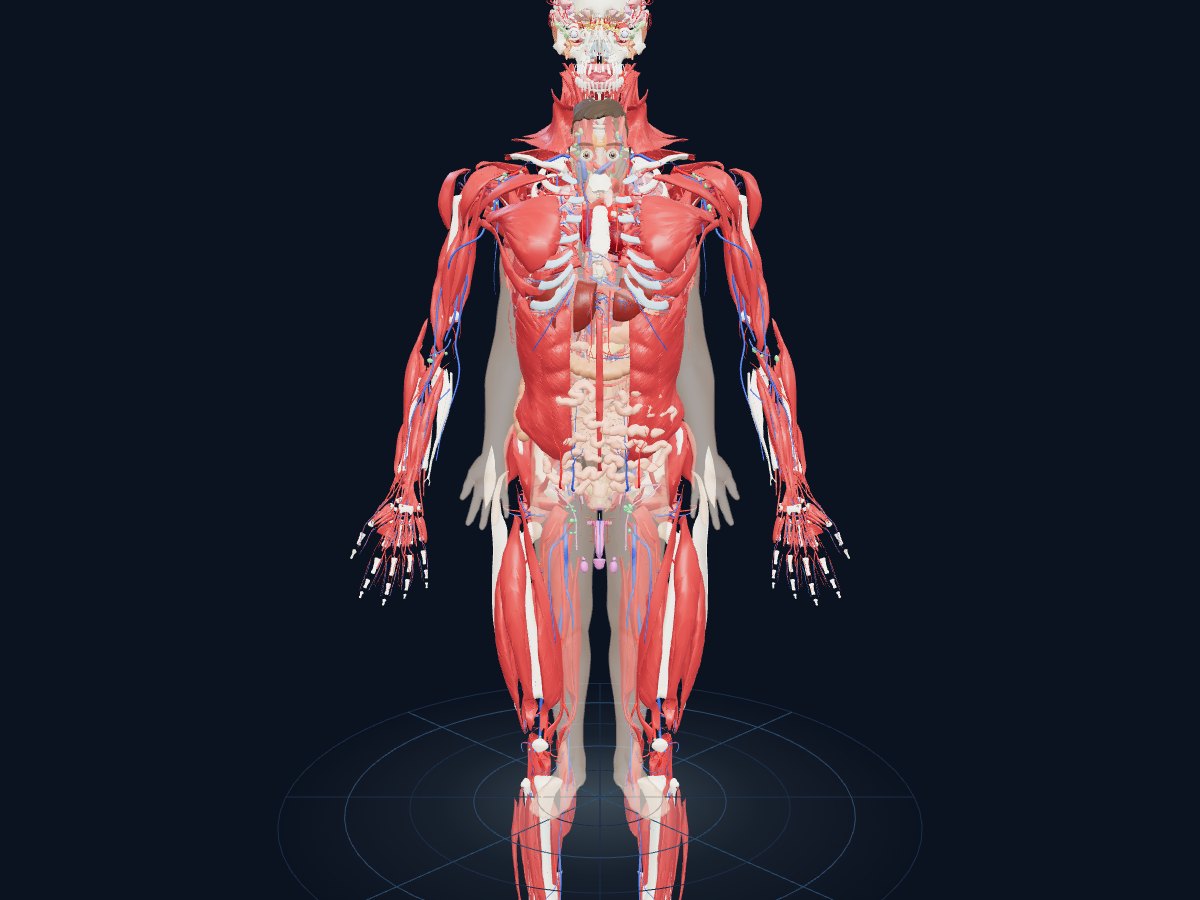
For a broader overview of these sections in one place, see the ASFAN VR Medical hub. For a closer look at anatomy and surgical training specifically, see Virtual Reality in Medicine and Medical Training VR.
Medical VR training content: how ASFAN builds it
Every medical VR simulation training program is only as good as the medical VR training content behind it. Weak content produces a visually interesting demo; strong content produces a measurable skill. ASFAN develops medical VR training content through the following process:
- Understanding the medical or training objective with clinical stakeholders
- Defining the targeted clinical skills, decisions, and scenarios
- Designing the interaction, procedure steps, and learner flow
- Building the 3D environment, patient models, and medical content
- Testing the medical VR training content with real trainers and learners
- Refining, deploying, and supporting the finished simulation
This process keeps medical VR training content grounded in a real curriculum, rather than being built as a generic, one-size-fits-all experience.
Why medical VR training and simulation matter
Healthcare training has to balance several things at once:
- Patient safety
- Repetition until a skill is reliable
- Realism that transfers to real clinical settings
- Procedural clarity and correct sequencing
- Lower risk of costly or dangerous mistakes
- Learner confidence before real-world practice
It is often difficult to repeat a rare or high-risk clinical scenario enough times, train large cohorts consistently, or expose learners to sensitive situations in a live setting. Medical VR simulation training solves this by making practice structured, visual, and infinitely repeatable without added risk to real patients.
Who needs medical VR training content?
- Medical schools
- Nursing colleges
- Healthcare training centers
- Teaching hospitals
- Institutions seeking safe, repeatable medical VR simulation training
- Organizations that need custom medical VR training content built for a specific specialty
Why choose ASFAN for medical VR training and simulation
1. Custom medical VR training content
ASFAN builds medical VR training content around the real specialty, skill, and learning objective, not a generic template.
2. Coverage across clinical disciplines
Nursing, EMS, physical examination, psychiatry, surgery, devices and facilities, and blood-related training are already part of the ASFAN medical VR structure.
3. Arabic and English delivery
Medical VR simulation training is available in both languages, which matters for institutions serving multiple learner groups across Jordan, Saudi Arabia, Iraq, and the wider Middle East.
4. Education-first approach
ASFAN treats medical VR as a training and learning solution first, and a technology showcase second.
Frequently Asked Questions
What is medical VR?
Medical VR is the use of virtual reality to recreate clinical environments, patients, and procedures so healthcare learners can practice safely before treating real patients.
What is medical VR training?
Medical VR training is a structured, skill-based learning program delivered inside virtual reality, covering procedures such as nursing tasks, emergency response, physical examination, psychiatry, and surgery.
What is medical VR simulation?
Medical VR simulation is a realistic, scenario-based exercise inside VR where the learner responds to a clinical situation and makes decisions, then repeats the scenario to build confidence.
What is medical VR simulation training?
Medical VR simulation training combines structured training with repeatable, scenario-based practice, giving learners a complete cycle of learn, practice, simulate, and repeat.
What is medical VR training content?
Medical VR training content is the set of 3D environments, patient models, procedures, and interactive scenarios built for a specific clinical specialty, such as nursing, EMS, or surgery. See ASFAN's dedicated nursing page: https://asfanco.com/virtual-reality/medical/nursing.
Can ASFAN develop custom medical VR training content?
Yes. ASFAN builds custom medical VR training content around a specific specialty, clinical skill, and learner group, in both Arabic and English.
Conclusion
Medical VR, medical VR training, medical VR simulation, medical VR simulation training, and medical VR training content are all part of the same goal: helping healthcare learners build real skill in a safe, repeatable environment. If your organization needs a medical VR partner that can design the curriculum, build the training content, and deliver it across nursing, EMS, surgery, psychiatry, and physical examination, ASFAN has the specialty structure already in place.
Continue exploring the topic with the VR Medical hub, Medical Training VR, and Virtual Reality in Medicine, or browse the full virtual reality solutions catalog.
Contact ASFAN today to request a technical and financial proposal for medical VR training and simulation.
Request a medical VR training proposal or talk to ASFAN about your medical VR simulation training project.
Client & Visitor Reviews
Share your experience, feedback, or opinion about this page content.
Write a Review
Latest Reviews