Skip to content

Laboratory & Life Science Equipment

Colour, Gloss & Coating Measurement

Handheld instruments that replace visual judgement with numbers for colour, colour difference, surface gloss and coating thickness.

Colour, Gloss & Coating Measurement

Objective colour and surface quality

Colour, gloss and coating instruments give laboratories and production lines objective values instead of visual judgement. Portable spectrophotometers and colorimeters measure colour coordinates and colour difference against a reference, which is used to grade food products, flour, spices, oils, packaging and plant material. Glossmeters measure specular gloss on coatings, plastics, tiles, stone and packaging at 20°, 60° and 85°, and coating thickness gauges check paint and protective layers on metal non-destructively. Food and agricultural processors, packaging plants, university laboratories and quality-control departments use them. ASFAN supplies and supports these instruments and helps specify complete quality laboratories.

ASFAN supplies and supports colour, gloss and coating measurement instruments for laboratories and producers across the UAE.

Colour, Gloss & Coating Instruments

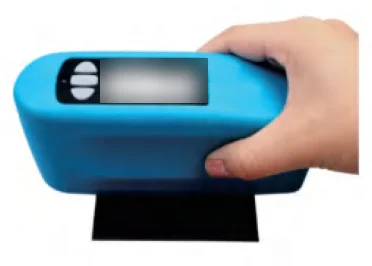
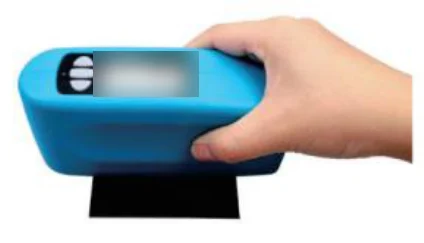
Precision 60° Glossmeter

Precision 60° Glossmeter

Handheld 60° glossmeter with LED light source for measuring specular gloss of coatings, inks, paints, wood products, stone, ceramic tiles and plastics.

  • Range0–200 GU
  • Angle60°
  • Measuring spot9×15 mm ellipse
  • Measuring aperture40×12 mm
Features & full specifications

Key features

  • Ergonomic, light, simple interface
  • Repeatability better than 0.2 GU
  • Manual input of standard-sample gloss values
  • Stores 50,000 records (100 standards × 500 groups)
  • Auto shutdown, low-battery and full-storage prompts
  • USB link to PC gloss analysis software

Technical specifications

Range0–200 GU
Angle60°
Measuring spot9×15 mm ellipse
Measuring aperture40×12 mm
Resolution0.1 GU (0–100); 1.0 (100–200)
Repeatability0.5 GU
Reproducibility0.4 GU
Size122×34×60 mm
StandardsISO 2813, ASTM D523 and others
PowerPower adapter
Request a quote
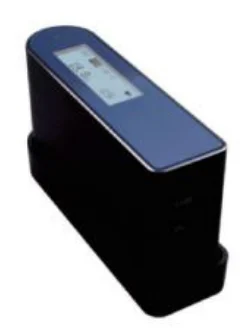
Tri-Angle Glossmeter (20°/60°/85°)

Tri-Angle Glossmeter (20°/60°/85°)

Multi-angle glossmeter measuring at 20°, 60° and 85° in one operation for metallic and non-metallic surfaces such as coatings, paints, stone, ceramics, plastics and paper.

  • Range20°: 0–2000; 60°: 0–1000; 85°: 0–160 GU
  • Measuring spot20°: 10×10 mm; 60°: 9×15 mm; 85°: 5×38 mm
  • Resolution0.1 (0–100); 1.0 (100–2000)
  • Repeatability0–100: 0.2; >100: 0.2%
Features & full specifications

Key features

  • Three incident angles (20°, 60°, 85°) measured in one operation per ISO 2813
  • Repeatability better than 0.2 GU
  • Multiple modes: single, sampling, statistics, continuous
  • 50,000 record storage
  • PC software via USB
  • Supplied with power adapter, calibration plate and data cable

Technical specifications

Range20°: 0–2000; 60°: 0–1000; 85°: 0–160 GU
Measuring spot20°: 10×10 mm; 60°: 9×15 mm; 85°: 5×38 mm
Resolution0.1 (0–100); 1.0 (100–2000)
Repeatability0–100: 0.2; >100: 0.2%
Reproducibility0–100: 0.5; 100–2000: 0.5%
Size159×49×72 mm
Power2 × AA batteries
Working temperature0–40 °C
Storage temperature-20 to 50 °C
Humidity<85% RH, non-condensing
Request a quote
Compact 60° Glossmeter with Lithium Battery

Compact 60° Glossmeter with Lithium Battery

Compact metal-shell 60° glossmeter with one-button operation and a rechargeable lithium battery, for gloss of coatings, inks, paints, wood products, stone, tiles and plastics.

  • Range0–200 GU
  • Angle60°
  • Measuring spot9×15 mm ellipse
  • Measuring aperture40×12 mm
Features & full specifications

Key features

  • Small metal shell; one-button operation
  • Stable industrial structure
  • Horizontal design for accurate positioning
  • Lithium battery: about 5,000 tests per charge
  • Optional micro printer for real-time printing

Technical specifications

Range0–200 GU
Angle60°
Measuring spot9×15 mm ellipse
Measuring aperture40×12 mm
Resolution0.1 GU (0–100); 1.0 (100–200)
Repeatability0.5 GU
Reproducibility0.4 GU
Size122×34×60 mm
Data storage100 groups
StandardsISO 2813, ASTM D523 and others
Request a quote
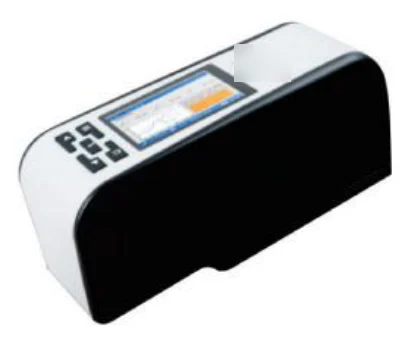
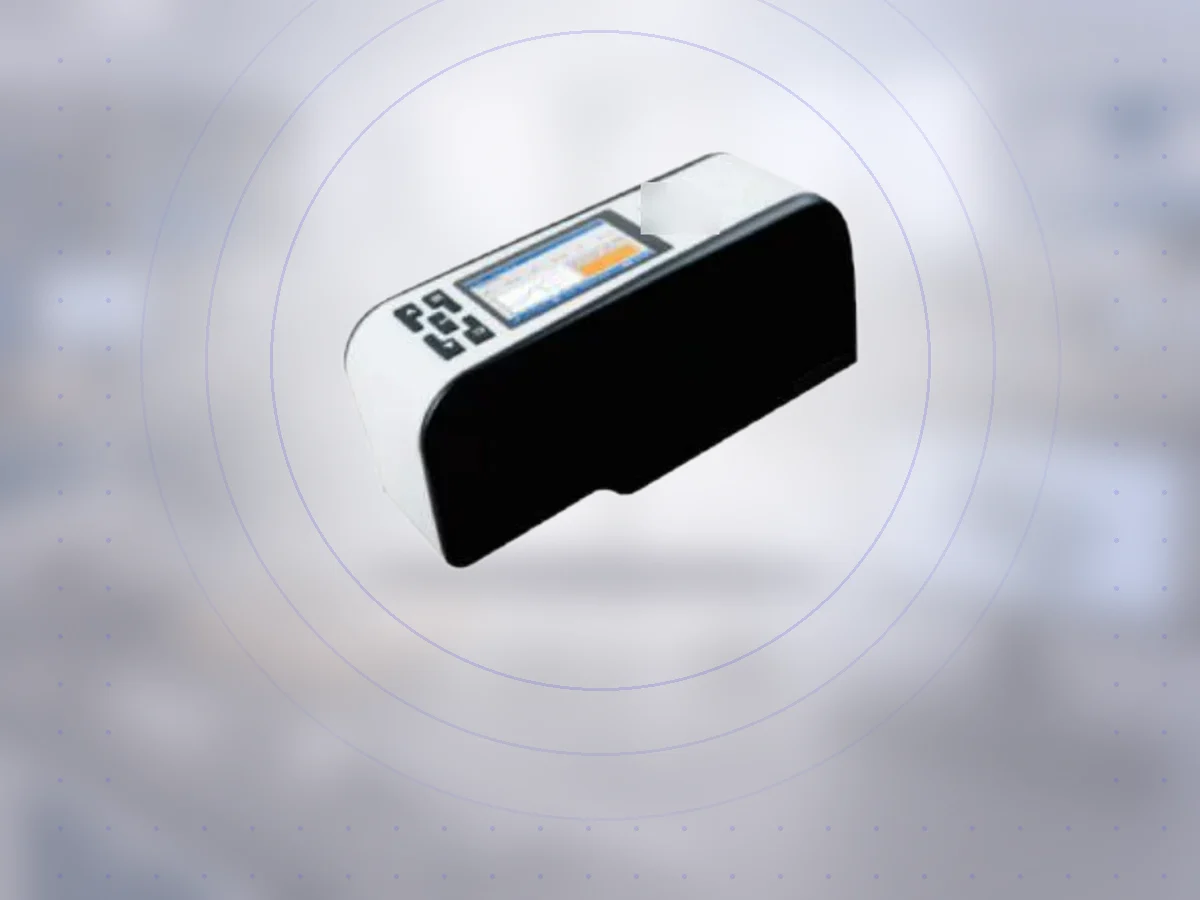
Portable Spectrophotometer (Colorimeter)

Portable Spectrophotometer (Colorimeter)

Handheld spectrophotometer for color quality control with high precision, good stability and strong anti-interference, offering six light sources and multiple color spaces.

  • GeometryD/8
  • Color spaceCIE L*a*b*, L*C*h, Yxy
  • Light sourcesA, C, D50, D65, F2 (CWF), F12 (U30)
  • Measuring apertureΦ4 / Φ8 / Φ16 mm optional
Features & full specifications

Key features

  • Stability ΔE<0.07; inter-instrument difference ΔE<0.4
  • 3200 mAh rechargeable lithium battery, >10,000 measurements per charge, overvoltage protection
  • Spectral data and Lab values
  • Average measurement 1–99 times
  • 6 light sources, 2 observer angles, multiple color difference formulas
  • 2.8-inch TFT color screen
  • Optional PC software and micro printer

Technical specifications

GeometryD/8
Color spaceCIE L*a*b*, L*C*h, Yxy
Light sourcesA, C, D50, D65, F2 (CWF), F12 (U30)
Measuring apertureΦ4 / Φ8 / Φ16 mm optional
SensorLinear CMOS array, 256 pixels
Wavelength range400–700 nm, 10 nm interval
Reflectivity range0–200%
Measurement time2.5 s
RepeatabilityΔE<0.07
Inter-instrument differenceΔE<0.4
Request a quote
Portable Spectrophotometer (Color Difference Meter)

Portable Spectrophotometer (Color Difference Meter)

A portable spectrophotometer for quality control and color evaluation of different measurement surfaces in many industries. The standard sample is measured first, then the sample, and the color difference value is shown on the color LCD. Two versions are offered.

  • Geometryd/8 (CIE recommended)
  • Light sourceCombined LED
  • SensorLinear array CCD, 2048 pixel
  • Wavelength range400-700 nm, 10 nm interval
Features & full specifications

Key features

  • Dedicated spectral detection core for accurate color parameter measurement
  • Each unit debugged and checked against a 24-color card for data consistency
  • Ergonomic, small and light body with TFT color HD screen and graphical interface
  • Low-power design; more than 10,000 measurements per full lithium battery charge
  • LED light source with 20,000-50,000 hour service life
  • High-sensitivity spectral core; measurement interval under 2.5 seconds
  • ARM + FPGA electronics with correlated double sampling for stability
  • 1200-line diffraction grating and 2048-pixel CCD sensor
  • Displays standard and sample data, conditions, reflectance spectrum curve and color simulation together

Available configurations

  • Standard version: CIE L*a*b*, L*C*h, Hunter Lab color spaces; SCI mode; light sources A, D65, D50, F1, F4, F11
  • Advanced version: 20+ color spaces and whiteness indices, SCI/SCE modes, light sources A to F12 (incl. CWF, TL84, U30), switchable 8/4 mm aperture

Technical specifications

Geometryd/8 (CIE recommended)
Light sourceCombined LED
SensorLinear array CCD, 2048 pixel
Wavelength range400-700 nm, 10 nm interval
Measuring aperture8 mm / 4 mm / 16 mm
Measurement interval2.5 s
RepeatabilityΔE < 0.05 to ΔE < 0.07
Screen2.8 inch TFT true color
Storage100 standards / 16,000 samples
Weight / size700 g; 199 x 68 x 90 mm
Request a quote
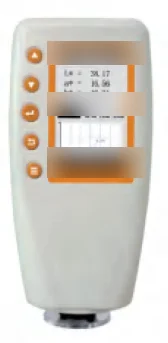
Pocket Pen-Type Colorimeter

Pocket Pen-Type Colorimeter

A compact handheld colorimeter that can be applied to color testing work in a wide variety of industries. Offered in three grades (basic, standard and pro).

  • GeometryD/8, SCI (specular included)
  • Light sourceFull spectrum LED (pro: + UV lamp)
  • Measuring aperture8 mm
  • Wavelength range400-700 nm, 10 nm interval
Features & full specifications

Key features

  • SCI light mode, full LED light source with UV lamp support (pro), up to 34 color spaces
  • Knob / press integrated key; measurement completed with one key
  • Cloud color library card lookup to identify color numbers
  • Bluetooth connection to a mobile app for data analysis
  • Type-C interface with PC software for Windows / iOS / Android and report output
  • Color card library support identifying more than 10,000 colors
  • One-key automatic calibration
  • Automatic color difference calculation with green / red background indication
  • Only 31 x 96 mm and 80 g
  • Protective optical sheet guards the measuring aperture against moisture, dust and pollution

Available configurations

  • Basic: CIE-Lab / CIE-LCh, ΔE*ab, D65 and A light sources, 1.5 s measurement
  • Standard: full color-space and whiteness/yellowness index set, 10°/2° observer, 1.0 s measurement
  • Pro: adds UV lamp, 0.01 display accuracy, 0.5 s measurement, 10,000 measurements per charge

Technical specifications

GeometryD/8, SCI (specular included)
Light sourceFull spectrum LED (pro: + UV lamp)
Measuring aperture8 mm
Wavelength range400-700 nm, 10 nm interval
RepeatabilityΔE*ab ≤ 0.1 to ≤ 0.05
Measuring speed1.5 s to 0.5 s
Screen1.14 inch OLED full color
Battery6,000-10,000 measurements per charge
InterfaceType-C / Bluetooth; Android, iOS, Windows app
Size / weightØ31 x 96 mm; 80 g
Request a quote
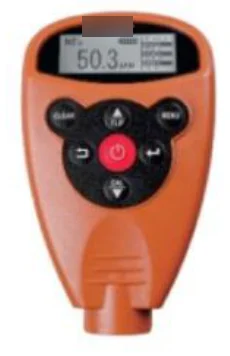
Coating Thickness Gauge

Coating Thickness Gauge

A portable instrument that measures coating thickness quickly, non-destructively and accurately, in the laboratory or on site. Different probes allow various measurements; used in manufacturing, metal processing, chemical industry and commodity inspection.

  • Measuring principleMagnetic induction + eddy current, automatic substrate recognition
  • Measuring range0-1500 µm
  • AccuracyZero cal.: ±(1 + 3%h); five-point cal.: ±[(1% + 3%h)] H + 1.5
  • Bluetooth appMax / min / average display, data storage, reports
Features & full specifications

Key features

  • Magnetic and eddy-current methods for non-metallic coatings on magnetic and non-magnetic metal substrates
  • Zero-point and five-point calibration
  • Automatic recognition of ferrous (FE) and non-ferrous (NFE) substrates
  • Battery level indication
  • Limit alarm when coating thickness exceeds the set value
  • Selectable units (µm / mil); English or Chinese interface
  • Manual and automatic shutdown modes
  • Negative display function for zero-point calibration accuracy

Technical specifications

Measuring principleMagnetic induction + eddy current, automatic substrate recognition
Measuring range0-1500 µm
AccuracyZero cal.: ±(1 + 3%h); five-point cal.: ±[(1% + 3%h)] H + 1.5
Bluetooth appMax / min / average display, data storage, reports
Power2 x AA batteries
Operating temperature0-40 °C, ≤85% RH
Minimum area10 x 10 mm
Minimum curvatureConvex 5 mm / concave 5 mm
Thinnest substrate0.4 mm
Weight / size115 g (with battery); 110 x 65 x 30 mm
Request a quote

Food and produce colour grading

Colour values for flour, rice, spices, juices, oils and fresh produce link appearance to quality grades, ripeness and processing conditions in a repeatable way.

Packaging and label consistency

Colour difference measurements keep printed packaging and labels consistent between print runs, batches and suppliers, protecting product presentation and customer confidence in the market.

Surface finish control

Glossmeters verify that coatings, plastics, tiles and finished surfaces meet the agreed gloss level, using the 20°, 60° or 85° geometry suited to each finish.

Protecting equipment and structures

Coating thickness gauges confirm that paint and protective layers on greenhouse frames, tanks and machinery meet specification, helping prevent premature corrosion.

Frequently Asked Questions

What is the difference between a colorimeter and a spectrophotometer?

Both report colour values. A colour spectrophotometer measures the full reflectance spectrum and supports more light sources and colour spaces, while a pen-type colorimeter is a compact, quick tool for routine colour checks and comparisons.

Why do glossmeters use different angles?

The 60° angle suits most surfaces. High-gloss finishes are measured at 20° for better resolution, and matt finishes at 85°. A tri-angle glossmeter measures all three in one operation.

Can the coating thickness gauge be used on any metal?

It measures non-magnetic coatings on magnetic steel and non-conductive coatings on non-ferrous metals such as aluminium, recognising the substrate automatically. It is not intended for coatings on wood or plastic.

Standardise your quality checks

Tell us the materials and surfaces you need to measure. ASFAN will recommend suitable instruments and prepare a quotation.

Request a Quote
Chat with us on WhatsApp