Engineering / Infrastructure / Labs
CFD Lab
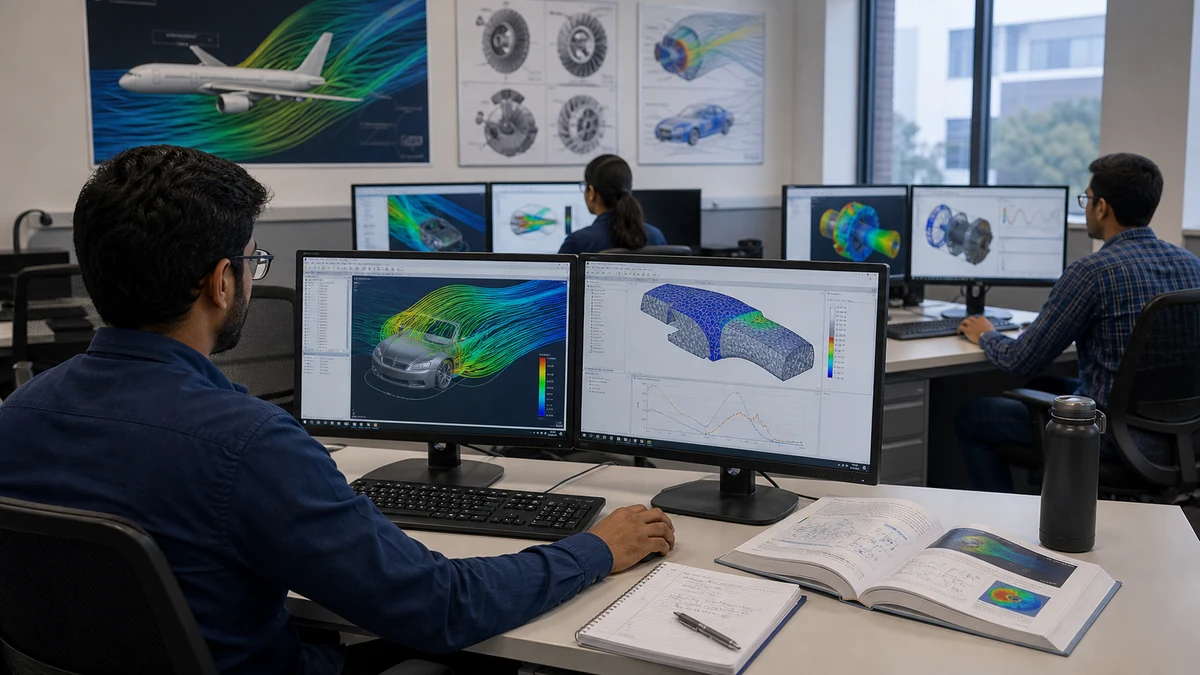
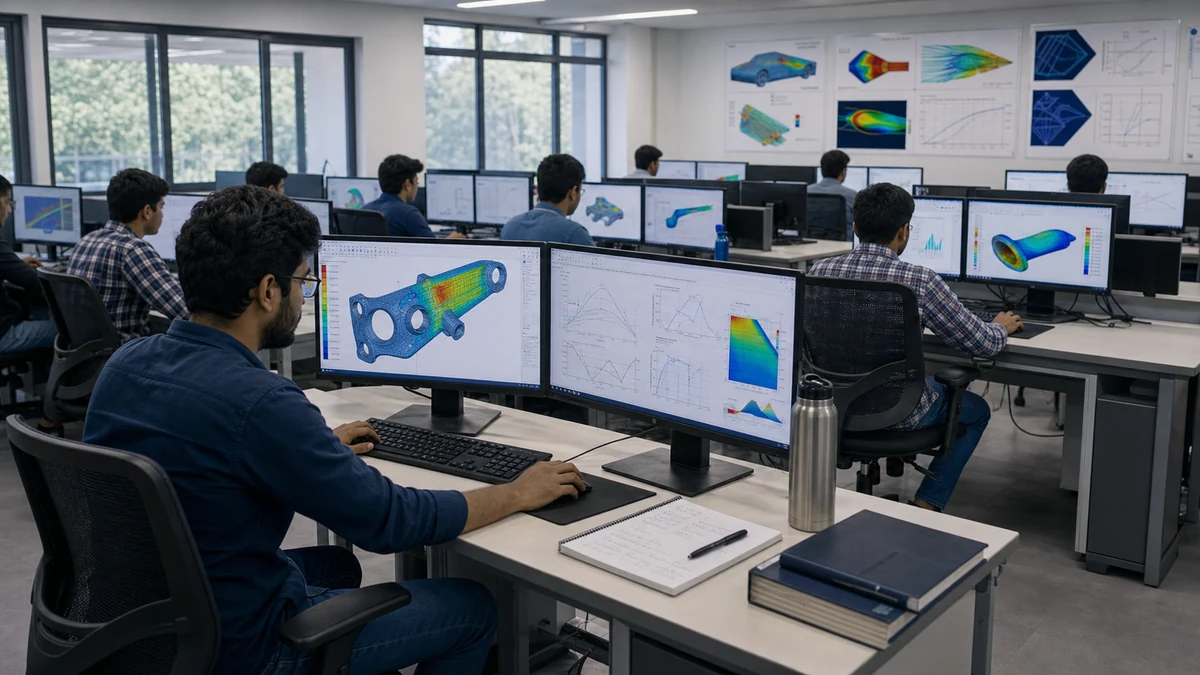
A simulation lab with workstations running Ansys Fluent and Python, where learners model fluid flow and heat transfer and validate their results against theory and experiment.
Overview
The Computational Fluid Dynamics (CFD) Lab extends the theory course into practice. Learners build geometry, generate meshes, set boundary conditions and solver settings, and run flow and heat-transfer simulations with industry-standard software.
Writing simple finite-difference and finite-volume solvers in Python alongside the commercial package helps students understand stability, accuracy and the sources of numerical error – and judge when a simulation can be trusted. ASFAN designs, supplies, installs and commissions the complete CFD Lab, with operating manuals, experiment sheets and instructor training.
Key Equipment
- PCs and engineering workstations (around 30 seats) – sized for meshing and solving
- Ansys Workbench and Fluent (student / academic licences) – geometry, meshing, CFD solving and post-processing
- Python with Jupyter, NumPy and Matplotlib – coding numerical methods and plotting results
- Printer and projector – for reports, graphs and demonstrations
Learning Objectives
By the end of the training, learners will be able to:
- Explain the governing equations of fluid flow and heat transfer used in CFD.
- Apply finite-difference and finite-volume methods and assess their stability and accuracy.
- Set up and solve flow problems in commercial CFD software: geometry, mesh, boundary conditions and solver settings.
- Validate CFD results against analytical, empirical or experimental data and identify sources of numerical error.
Career Relevance
Simulation skills from this lab are in demand in aerospace, automotive, energy, HVAC and process engineering.
Related Labs
Related engineering and technology solutions
Engineering lab equipment, technology equipment, and training solutions for institutions.
Digital fabrication, CNC, robotics, 3D scanning, and prototyping equipment.
University labs, smart engineering labs, workshops, and research facilities.
Concrete 3D printer systems for labs, research, and construction technology.
Precision 3D printing for research labs, prototyping, and engineering education.
Spatial vision cameras for robotics, 3D scanning, automation, and AI labs.