Engineering / Infrastructure / Labs
Machine Design Lab
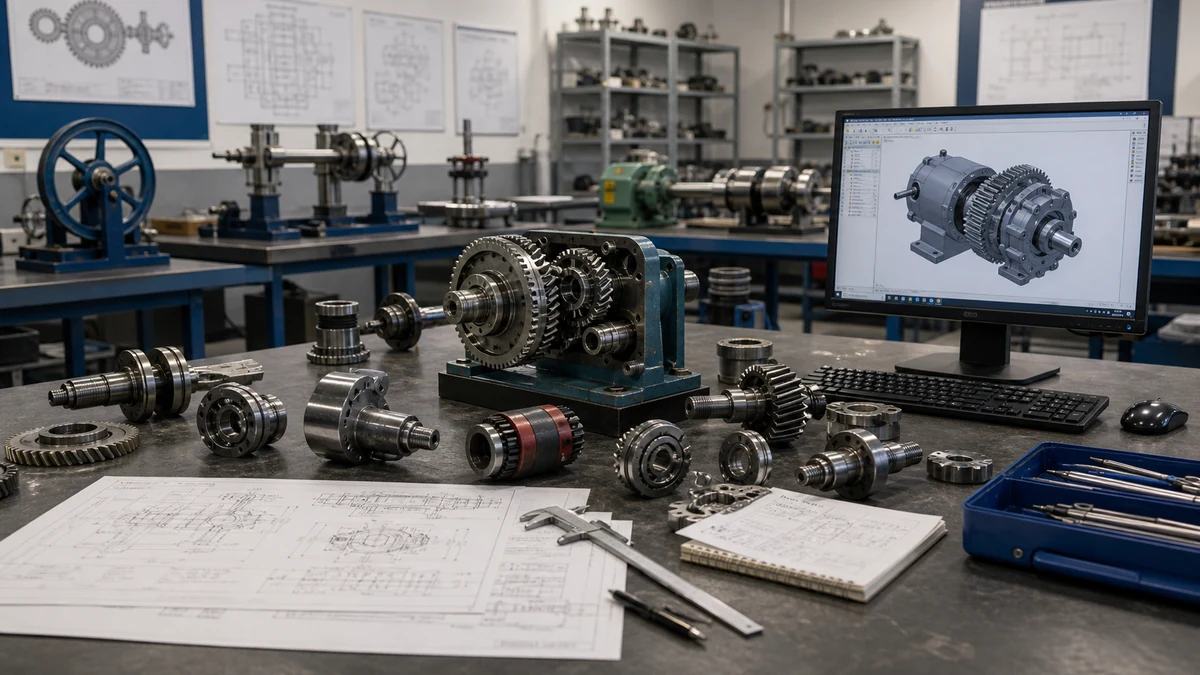
Real joints, gears, shafts, couplings, brakes and engine parts alongside CAD and design data, so learners can size and validate machine elements for real loading conditions.
Overview
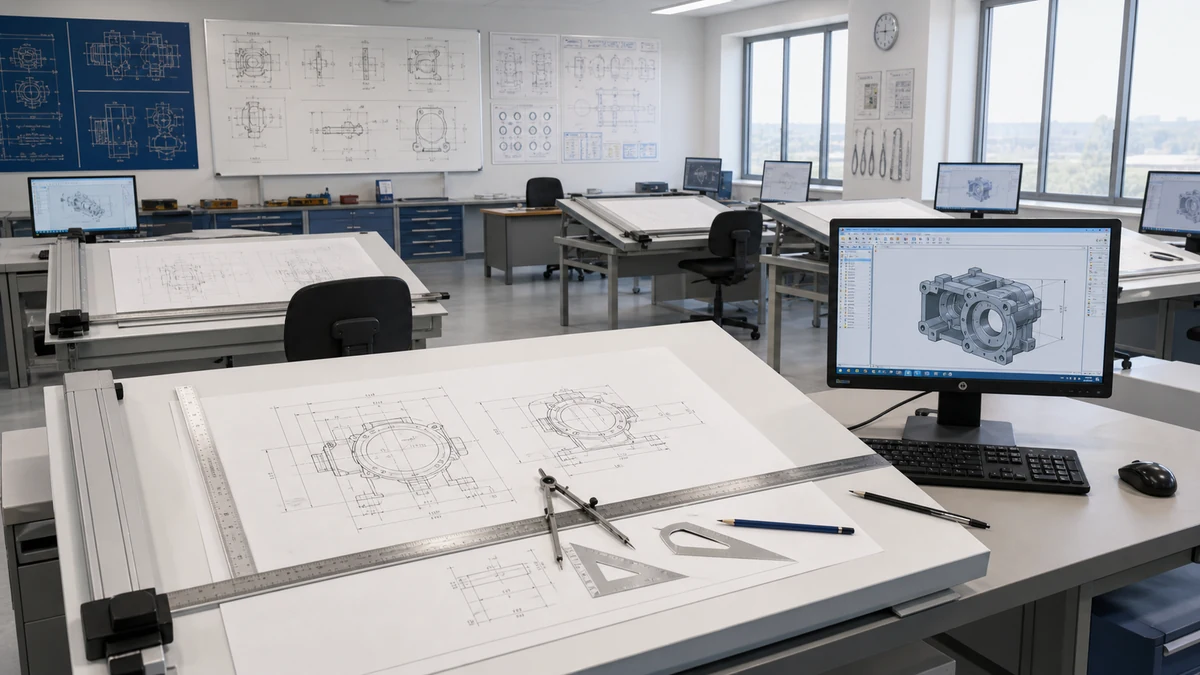
The Machine Design Lab runs over two linked modules and teaches the systematic design, analysis and validation of mechanical components and assemblies. Learners combine analytical calculation, empirical design rules, reference data and 3D CAD to choose materials, apply factors of safety and check performance under static and dynamic loads.
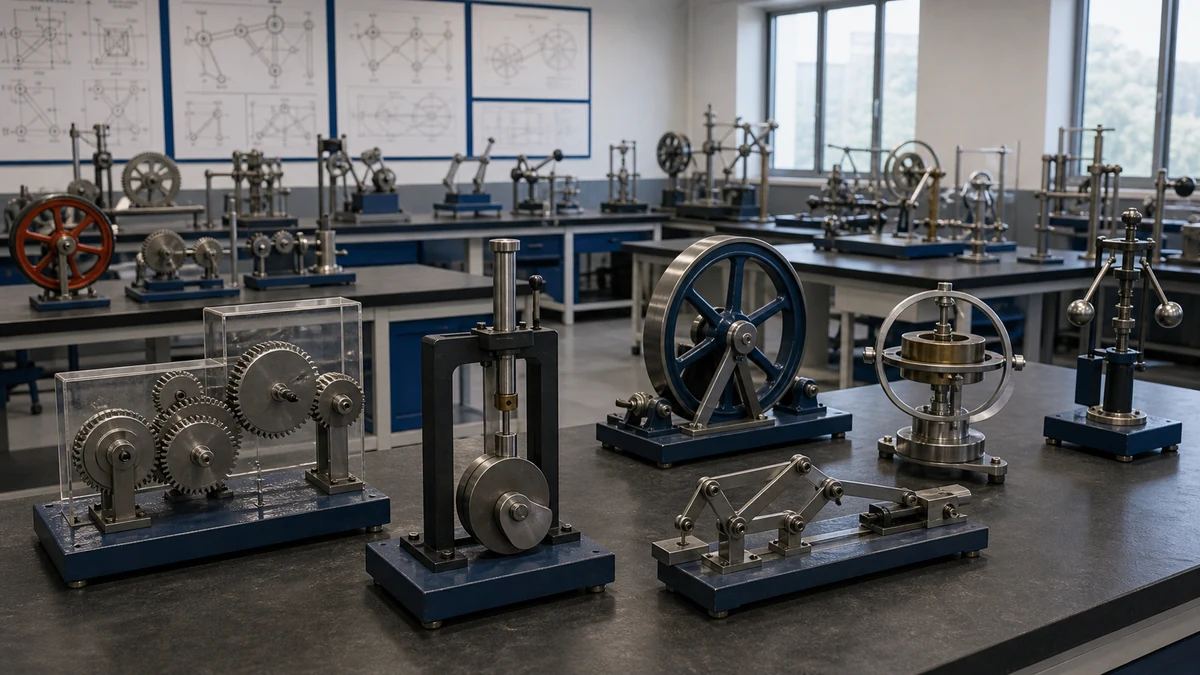
Physical models of every element they design – from cotter joints to gearboxes and connecting rods – keep the work grounded in how real parts look, fit and fail. ASFAN designs, supplies, installs and commissions the complete Machine Design Lab, with operating manuals, experiment sheets and instructor training.
Key Equipment
Transmission elements
- Spur and helical gears – gear geometry and load capacity
- Clutch plate – friction clutch design
- Rigid and flexible shaft couplings – shaft and coupling design
Joints
- Spigot-and-socket cotter joint and knuckle joint – design of detachable joints
- Pipe, riveted and welded joints – permanent and pressure joints
Load-bearing and lifting elements
- Screw jack – power screw design
- Crane hook – curved-beam stresses
- Wire ropes – rope selection and stresses
Automotive and engine components
- Connecting rod and piston-connecting rod assembly – design against fatigue and operating loads
- Double-shoe brake – brake design
- Gearbox models – gearbox layout and synthesis
Bearings and reference data
- Ball bearings – bearing selection
- Bearing catalogues and design manuals – standard design data
Learning Objectives
By the end of the training, learners will be able to:
- Follow a systematic procedure to design joints, shafts, couplings and transmission components.
- Use analytical and empirical methods to size gears, levers and threaded systems under static and dynamic loads.
- Analyse stresses, failure modes and safety of load-bearing parts such as crane hooks and wire ropes.
- Synthesise gearboxes, brakes and clutches for performance and reliability.
- Model and validate designs in 3D CAD.
- Evaluate engine components such as connecting rods and pistons for fatigue and operating loads.
Career Relevance
The lab bridges theory and industry practice for careers in automotive, aerospace, heavy machinery and industrial design.
Related Labs
Related engineering and technology solutions
Engineering lab equipment, technology equipment, and training solutions for institutions.
Digital fabrication, CNC, robotics, 3D scanning, and prototyping equipment.
University labs, smart engineering labs, workshops, and research facilities.
Concrete 3D printer systems for labs, research, and construction technology.
Precision 3D printing for research labs, prototyping, and engineering education.
Spatial vision cameras for robotics, 3D scanning, automation, and AI labs.