Engineering / Infrastructure / Labs
Computational Methods Lab
A programming lab where numerical methods – root finding, interpolation, integration and differential equations – are coded and tested on real engineering problems.
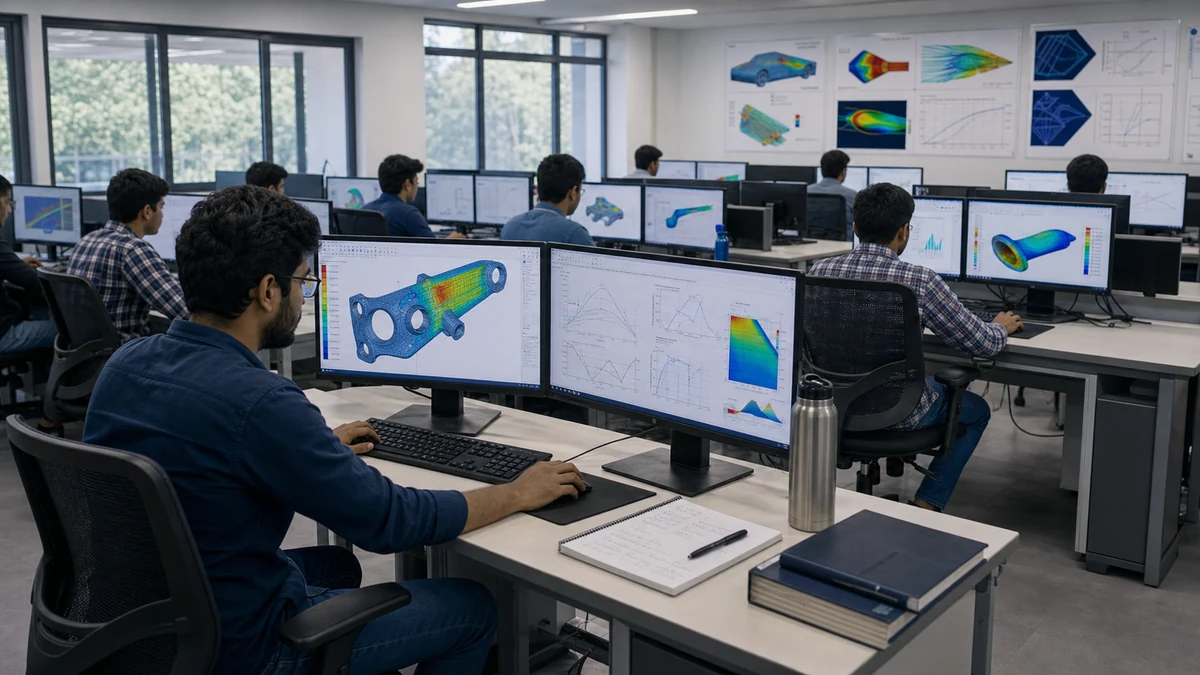
Overview
The Computational Methods Lab turns numerical-analysis theory into working programs. Learners write their own routines for root finding, interpolation, numerical integration and the solution of differential equations, then compare their results with analytical answers to judge accuracy and stability.
Coding the methods themselves, rather than only calling library functions, gives students a clear understanding of what engineering software does behind the scenes. ASFAN designs, supplies, installs and commissions the complete Computational Methods Lab, with operating manuals, experiment sheets and instructor training.
Key Equipment
- Computer workstations (25+) – high-performance PCs set up for programming and numerical work
- SciLab – open-source numerical computing environment
- C/C++ compiler and IDE – for writing and debugging numerical programs
- Numerical libraries – added as required by the course
- Printer and projector – for documentation, demonstrations and group work
Learning Objectives
By the end of the training, learners will be able to:
- Use basic C++ programming to build numerical-computation programs.
- Program methods for finding the roots of algebraic and transcendental equations.
- Implement interpolation formulae in code.
- Write programs for numerical integration and the solution of differential equations.
Career Relevance
The lab bridges mathematics and practice, preparing learners for simulation, research and data-driven engineering roles.
Related Labs
Related engineering and technology solutions
Engineering lab equipment, technology equipment, and training solutions for institutions.
Digital fabrication, CNC, robotics, 3D scanning, and prototyping equipment.
University labs, smart engineering labs, workshops, and research facilities.
Concrete 3D printer systems for labs, research, and construction technology.
Precision 3D printing for research labs, prototyping, and engineering education.
Spatial vision cameras for robotics, 3D scanning, automation, and AI labs.