
On This Page
The first wave of digital technology in education was mostly delivery. Put the lecture on a screen, put the quiz in a browser, put the file in a cloud folder. It made administration easier and left the teaching itself largely untouched.
The recent digital developments in education are different in kind. They target the part that was always hardest and most expensive: giving a student something to do that carries real consequences, at a cost the institution can afford to repeat.
This article looks at where the shift actually happened, what simulation-based learning changes about assessment, and how an institution should evaluate a purchase without buying a very expensive video player.
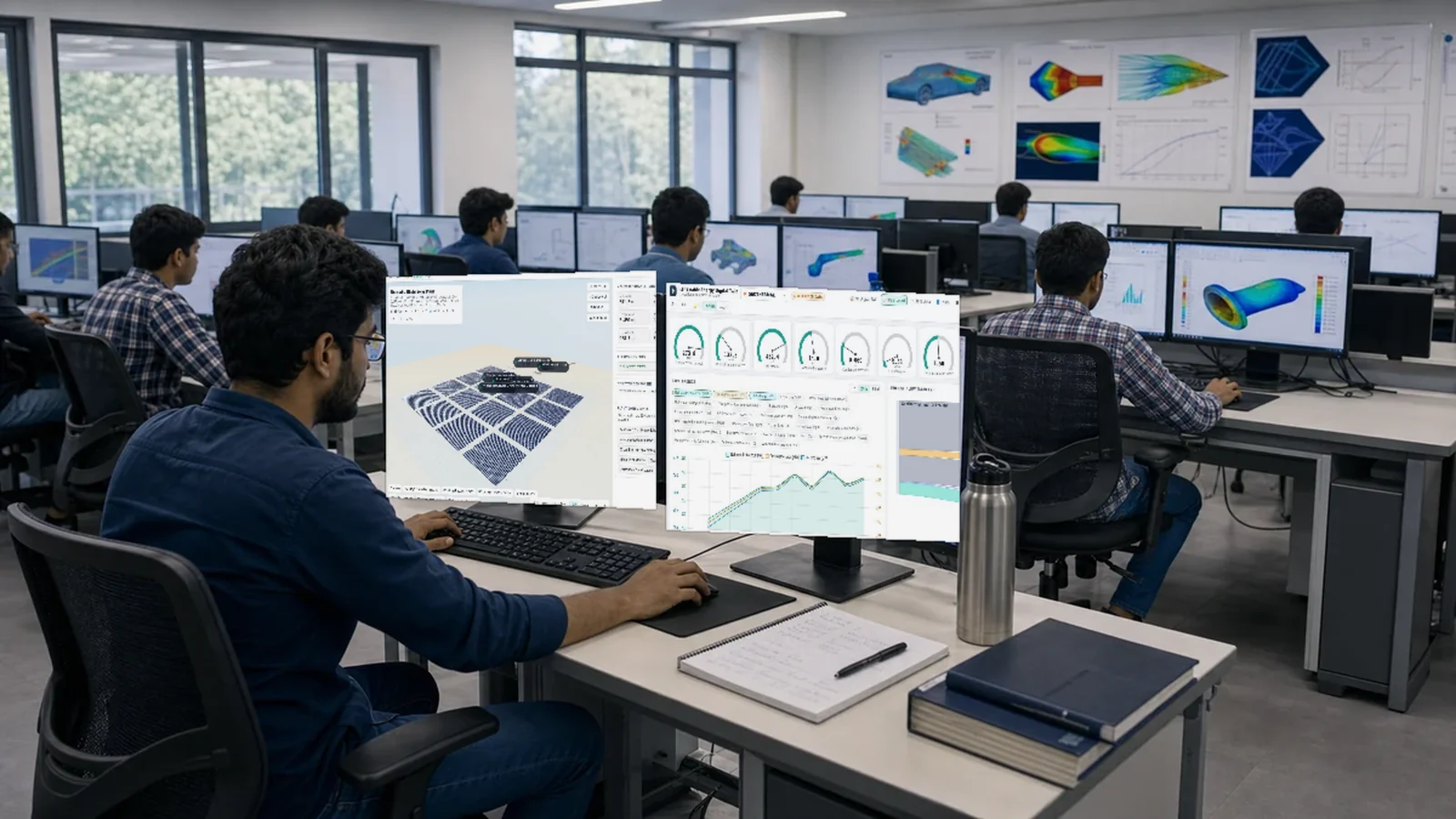
Three shifts in digital technology in education that mattered, and one that didn't
Shift one: from content delivery to practice environments. Content has been free and abundant for a decade. What remains scarce is supervised practice. Tools that generate practice, such as simulators, labs and scenario engines, are now the interesting category.
Shift two: from single-user software to shared spaces. Several students inside one model at the same time, each with a role, is a different pedagogical object from several students each running the same app alone.
Shift three: from opinion-based assessment to behavioural data. When a student operates a simulated system, you can see the sequence of their decisions, not just their final answer. That is a genuinely new assessment input.
The one that didn't matter: device count. Institutions that measured their digital transformation in tablets purchased have mostly nothing to show for it. Hardware is a precondition, never a strategy.
Simulation-based learning: why a twin beats a video
A video of a solar installation shows a student what one looks like. A solar simulator lets the student change the tilt angle, watch the yield curve respond, get it wrong, and understand why.
The difference is that the second one has consequences. Learning science has been consistent on this for a long time: retrieval and consequence beat exposure. The large meta-analyses of active learning in STEM courses point the same way, with lower failure rates and higher exam performance when students practise rather than watch.
Practically, a teaching simulator earns its place when at least one of these is true:
- The real equipment is too expensive for every student to use. (Power plant control rooms, industrial process lines.)
- The real equipment is too dangerous for a novice. (High voltage, chemical handling, biosecurity-controlled environments.)
- The interesting conditions are too rare to schedule. (Faults, grid disturbances, contamination events.)
- The system is too slow to observe in real time. (Seasonal yield, degradation over years.)
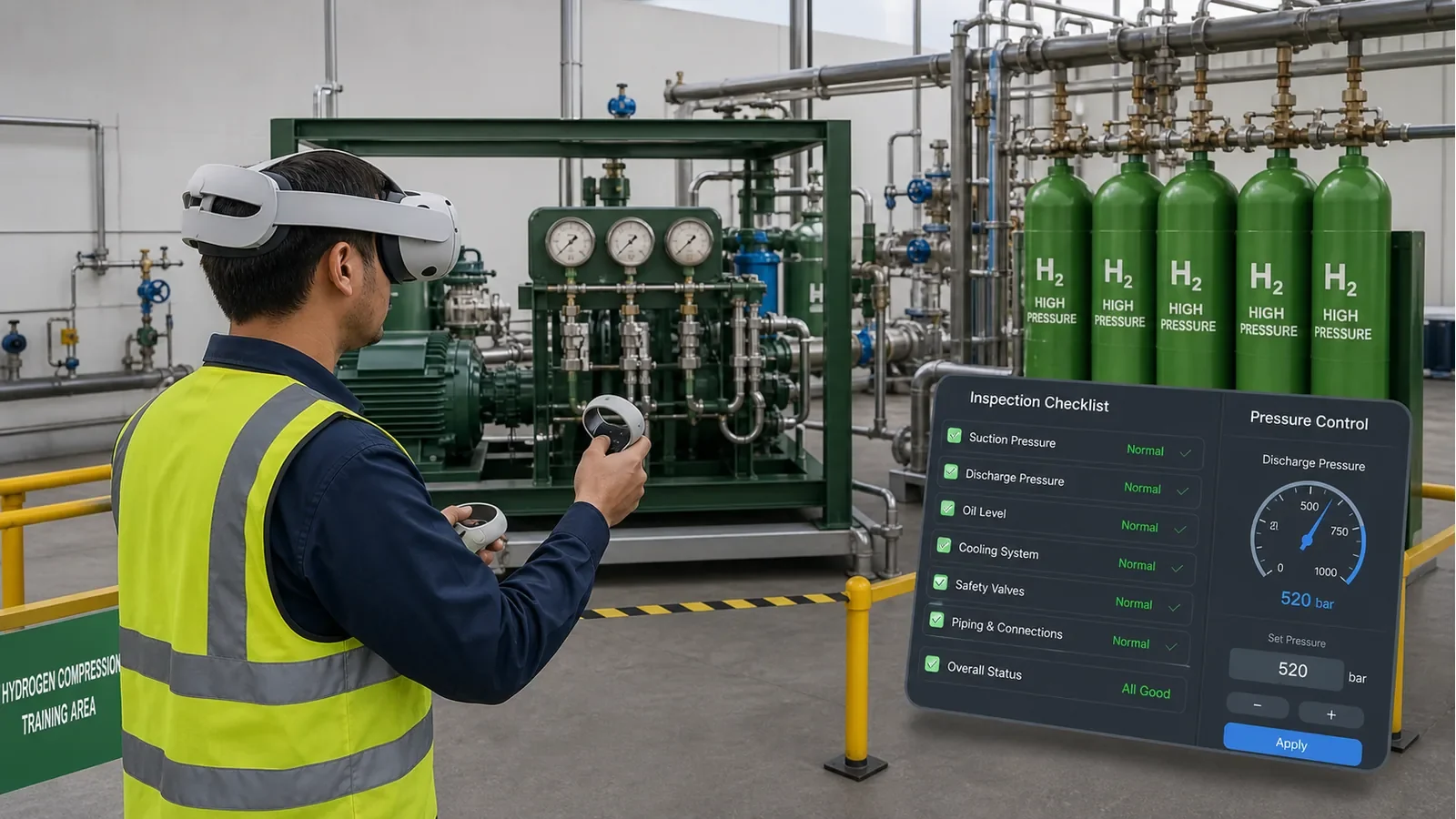
If none of those apply, a lab bench is probably better and cheaper than software. Being honest about that is the difference between a procurement that gets used and one that gets defended in annual reports.
Where educational simulation fits by discipline
| Discipline | What a simulator adds |
|---|---|
| Engineering / energy | Plant operation, yield estimation, fault response without risk to equipment |
| Food and agricultural sciences | Biosecurity procedures and incident response that cannot be rehearsed in a live facility |
| Architecture / civil | Walking an unbuilt design at full scale before it is costed |
| Vocational and technical training | Repetition on equipment the institution could never buy in quantity |
Educational digital twins from ASFAN
ASFAN builds Windows-based educational simulators where every displayed value traces back to a physical equation or a configured parameter, in Arabic and English:
- Arab World Solar Kids Digital Twin, an educational solar simulator for schools and universities.
- Renewable Energy Digital Twin, a 3D power plant simulator covering solar, wind, hydro, geothermal, biomass and waste-to-energy.
- All education digital twin software.
VR labs in universities: shared walkthroughs that actually teach
VR in education has a credibility problem, largely self-inflicted by a decade of demos that were impressive for four minutes and useless as curriculum.
The version that works is narrow. A shared walkthrough of a real model, such as a building from a BIM file, a plant layout or a facility under design, where a group enters together and discusses what they see. It replaces a site visit that costs a bus, a day and a safety officer, and it can be repeated weekly.
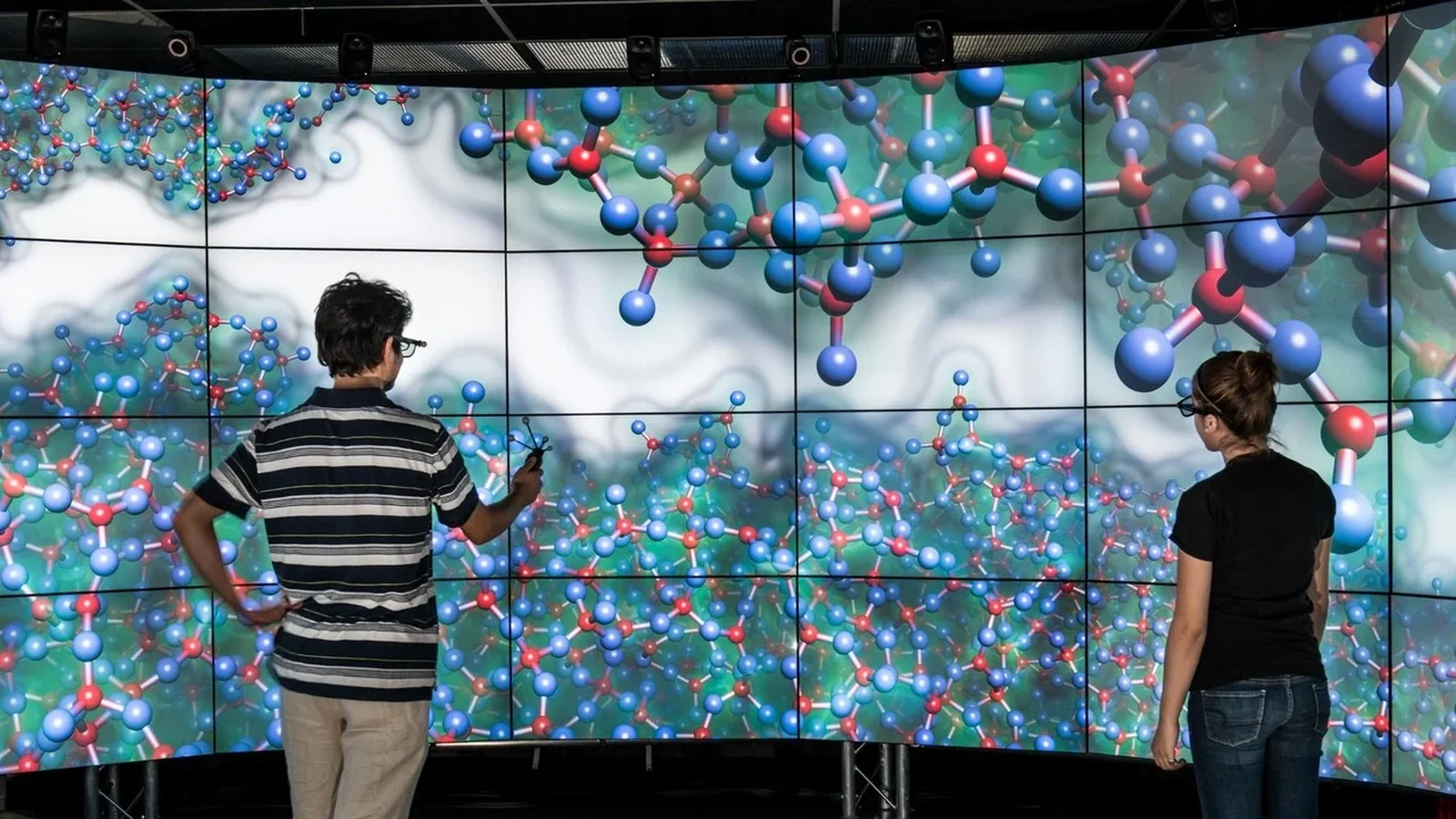
Two practical constraints institutions underestimate:
- Headset logistics. Charging, hygiene, storage and a technician's time are recurring costs that rarely appear in the business case.
- Session length. Plan for 15 to 25 minutes of headset time inside a longer class. Sessions built around an hour in VR do not survive contact with a real timetable.
See how ASFAN applies this in VR for civil engineering and architecture, where BIM and Revit models become shared, full-scale walkthroughs.
An evaluation checklist for institutions
Before committing, get written answers to these.
- Curriculum fit. Which specific learning outcome does this serve? If the answer is a department rather than an outcome, stop.
- Language. Is the interface genuinely bilingual, Arabic and English, including reports and units, or is Arabic a label layer added later?
- Offline operation. Does it work on a campus network with restricted internet, or does it need a live connection for every session?
- Instructor authoring. Can a lecturer build or modify a scenario without the vendor? If not, the tool ages the day the pilot ends.
- Assessment output. What does it export to the LMS, and in what format?
- Concurrency licensing. Price per seat, per lab, or per campus, and what year two costs.
- Accessibility. Does it degrade gracefully for students who cannot use a headset?
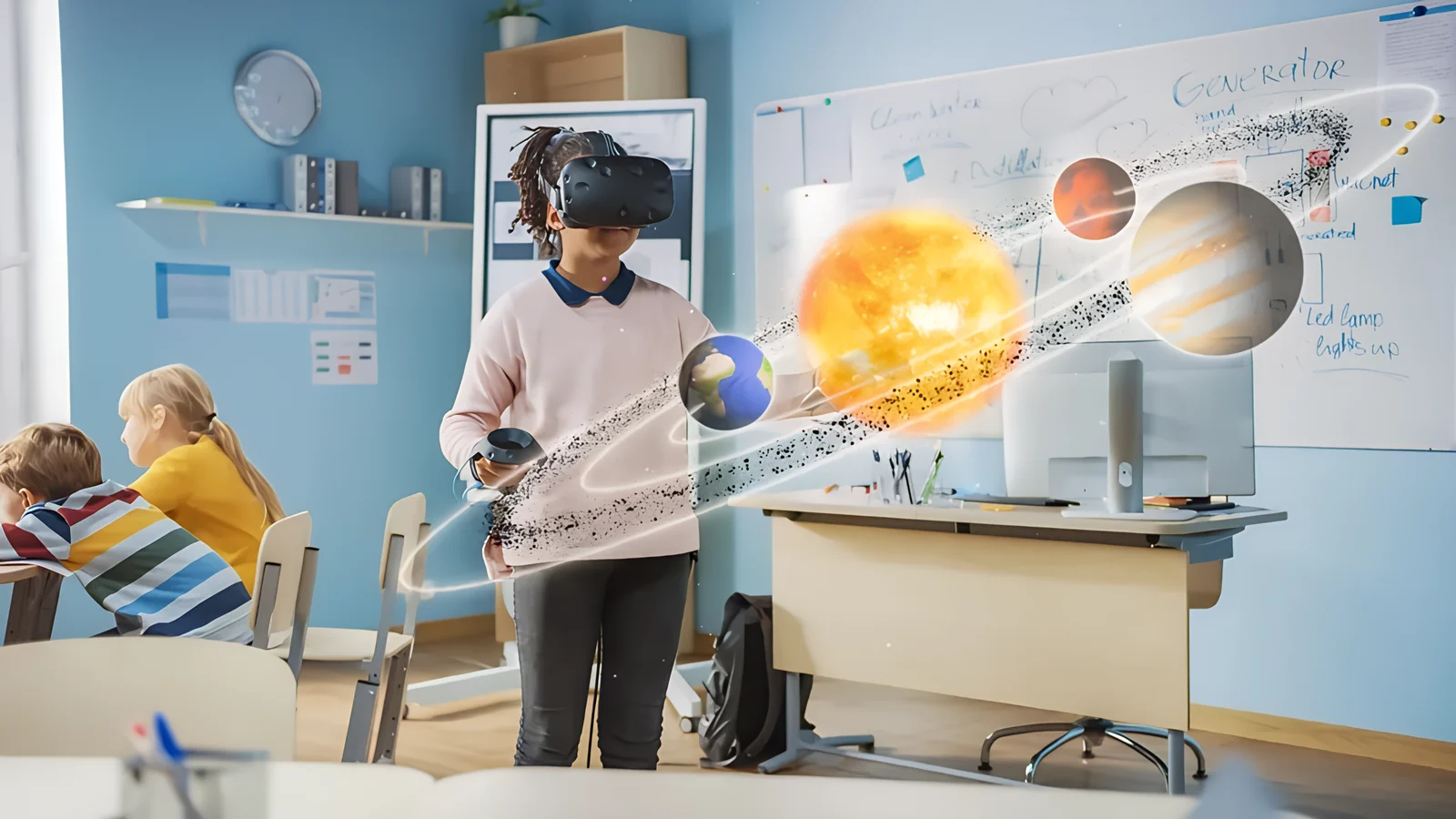
Run a pilot with one course and one instructor who actually wants it. Volunteer-led pilots succeed at several times the rate of mandated ones, and the reason is not mysterious.
Measuring whether it worked
Attendance and satisfaction surveys will tell you the tool was enjoyable. They will not tell you it taught anything.
Better measures: performance on a task the simulator did not cover directly (transfer), time to competence on the real equipment afterwards, and error rate on first real-world attempt. Pick the measure before the pilot starts, not after the results arrive.
What to do next
Digital technology in education is no longer short of options. It is short of clear decisions about what problem the technology is being asked to solve.
Start with the single course where the gap between what students can practise and what they will be expected to do is widest. That is where a simulator returns the most, and it is a far better starting point than a campus-wide platform decision.
For the industrial side of the same technology, see our guide to operational twins and digital simulation.
FAQ: Digital Technology in Education
What counts as digital technology in education today?
Beyond learning management systems and digital content, the active categories are simulation-based learning, virtual and mixed reality labs, adaptive assessment, and analytics built on student interaction data rather than test scores alone.
Is simulation-based learning proven, or is it a trend?
Simulation has been standard in aviation and medicine for decades, which is the strongest available evidence. Its spread into engineering, energy and agricultural education is recent mainly because the cost of building simulators fell, not because the pedagogy is new.
Do universities need VR headsets to benefit from simulation?
No. Most of the learning value in a simulator comes from the underlying model, which runs perfectly well on a desktop. VR adds spatial understanding and shared presence, which matter for some subjects and not others.
How should a university budget for educational simulation?
Budget the licence, the instructor time to build scenarios, and the technical support separately. Institutions consistently underfund the second item, which is the one that determines whether the tool is still used in year three.
What are the biggest digital developments in education right now?
The shift from content delivery to practice environments, shared multi-user learning spaces, and assessment based on observed decision-making rather than final answers alone.
Client & Visitor Reviews
Share your experience, feedback, or opinion about this page content.
Write a Review
Latest Reviews